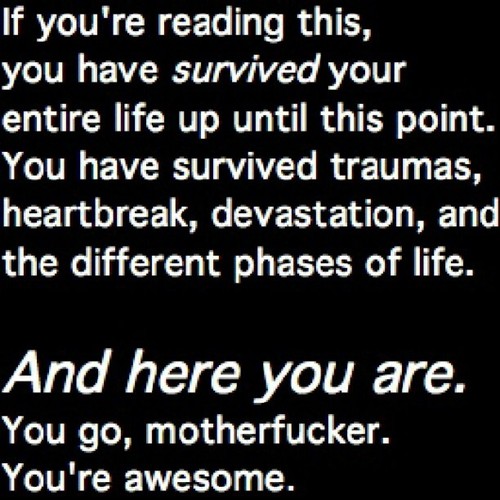
And Here You Are
What has set me off this fine Monday morning? I had the local news on for the morning infusions of doom and gloom and fluffy stories. One of the health headlines: a new study linking alcohol to cancer deaths. According to the segment, this study was done by the American Journal of Public Health, and it is the “first comprehensive study of alcohol connected cancer deaths in 30 years.” Note it says “connected” not caused. The report fails to explain how alcohol consumption makes cells turn into cancer. In fact it only says that number crunchers analyzed how many people died of cancer who also drank alcohol. That is all. According to the study, alcohol accounts for 3.5% of cancer deaths, with 45 to 60% being people who had more than 3 drinks per day, and 30% being those who had about 1.5 drinks per day.
I went to the American Journal of Public Health website and did not see this report in any of the headlines, it may have been in one of the monthly journals but my lame computer skills seem to prevent me from being able to read them. It is possible this news is a few months old and my rural local news station is just now “getting around to it”. At any rate, as I am unable to read the report, I only have the local news video as my source of info. One issue that I’d like to know more about is how the conclusions were reached. The news video indicated that number crunchers simply took info about every person who died of cancer in 2009, and decided if they drank alcohol each day, then that is why they had cancer and died. There was no indication that other factors were considered, such as if the person lived near a factory that puts carcinogens in the environment. I really hope they did consider other factors, because my understanding from the segment I saw makes me think that these analysts simply looked at alcohol intake and said “oh, that’s it right there, the reason why they got cancer and died”, and just flushed all other potential causes down some mental toilet.
Two other tidbits that irk me beyond reason:
First comprehensive study in 30 years? Really? Then why is it every damn time I absorb information from TV, internet, or print media, I see some item linking alcohol to cancer. I swear the information is now burned into my brain. And until I read the report or hear more information filtered by someone who can effectively translate science jargon into understandable English, I have my doubts about this comprehensiveness.
And the stats—please–3.5% in my cancer experience is a really small number. Everything for a breast cancer patient is geared to the majority, such as using mammography as the standard for finding cancer, when 20% get false negatives. In spite of my false negative history, my doctor still is anxious to take my away from having annual MRIs which I trust a bit more than mammograms, so I guess we in that 20% don’t matter. Or how about the fact that most breast cancer patients are post-menopausal and even though there are standards in place requiring doctors to talk about fertility with younger patients, it rarely happens (I cannot remember actual stats on this, not being the maternal kind, and I’m too angry to be patient enough to find the percent, I only know it was rare). In cancer, majority rules, so why are panties in a twist about 3.5%?!!
My message is REAL simple today:
Medical Scientists:
Stop studying alcohol and cancer. The links have been established, and since I see “limit alcohol intake” every time I read about how to lower risk of breast cancer, I think this issue is drained. All those doing research, please talk to each other, acknowledge this fact collectively and find another potential cancer cause to study preferably one that cannot be turned around to be the fault of the cancer patient.
People Giving Money to Fund Studies Linking Alcohol to Cancer:
I don’t know if y’all just a bunch of teetotalers or what, but this issue is done and proven, it does NOT need further study and proof. If you don’t like alcohol that is too bad, stop punishing those of us who do.

To Both Of The Above: Your fixation with this issue is preventing real investigation on other causes. We need to move forward. A percent like 3.5% means that if all the alcohol in the world disappeared overnight, cancer would still happen. In fact, maybe I wish all alcohol would just disappear, it would force you to study something else.
All Members of the Media (and Advertisers):
Stop reporting this. If I had a dollar for every time I heard it I could pay my cancer-related medical bills. So that means I no longer listen (except today, because I went off), indeed I change the channel/navigate away from the page/throw away the newspaper every time I see this kind of information, meaning I am not seeing advertisements placed by your major funding sources, and am not visiting or using these businesses. I’m trying to hit you in your wallet; maybe that will make you pay attention.
Do I really think my little rant will make a difference? No, not if I am the only one who feels this way. I hope others can see my point of view too.
I’ve gone off quite a bit on my blogs about my annoyance with the suggested measures for reducing the risk of cancer. There was always one point percolating in my mind about which I would not write, because I was not sure how I could make the point, or if I even had it correct in my mind.
Let me backtrack a moment to my high school days. I am a Gen Xer, taught almost exclusively by boomer ex-hippies in my public school. My teachers were the “get out in the street and protest” sort. I never, ever forgot one of these teachers criticizing the environmental movements of the time. This teacher pointed out that the politicians of the Earth Day era put the burden on the individual to recycle, reduce, and reuse, when it was, and still is, more effective if big industry would change their practices. I’ll never forget that, and while I do recycle, reduce, and reuse, it has always been in the back of my mind that my little pea-pickin’ actions were nothing compared to what is needed, and could be accomplished if various industries were monitored and properly motivated.
A couple of weeks ago, I came across an article called Forget Shorter Showers, which essentially said what this teacher said so long ago, but with a lot more facts and stats to prove the point. It gave me the inspiration to explain the story above, and to ask: how does this apply to cancer? Well, I suspect it may apply quite a bit.
It seems most articles I see that discuss causes of cancer, or ways to reduces risk of cancer, I read the same tired litany of suggestions: exercise, eat right, don’t smoke or drink (you know, the same suggestions thrown out in discussions about heart health, and nearly every other BIG AILMENT). It is much more difficult to find anything saying don’t use product X, it contains a massive amount of carcinogens, or move away from (some random area), because (X corporation) factory is pumping tons of carcinogens into the air/soil/water. No, the onus is always on the individual to do what he or she can to reduce their own risk. Granted, journalists cannot point a finger at a brand name and/or product and yell “cancer causing” unless there are proven facts supporting it—otherwise it’s just slander—but why is there no urgency to research suspected products and their cancer-causing ingredients in the first place? Why are the harmful chemicals in ANY food or product in the first place? How are these industries that can cause so much environmental damage allowed to continue to do so?
Sure, I can eat right and exercise like mad, and maybe forsake my beloved wine. But is it a guarantee that I will not get cancer again? Well no, because I have to breathe the air, use products with carcinogens, etc. So much is out of my control, and the corporations (corporations are people too, yuk, yuk) have nothing to keep them accountable. And keep in mind, “eating right” is not easy as it seems. So many food-as-cancer-prevention articles suggest eating organic; in other words, spending money many don’t have on products that are hard to find, perhaps unavailable. Hey, not all of us breast cancer survivors have the disposable income to spend on organic foods. And again, why is the onus on the individual to seek out the “better” food, yet there is no pressure to eliminate the harmful products in all food?
The article states that “we’ve been victims of a campaign of systematic misdirection. Consumer culture and the capitalist mindset have taught us to substitute acts of personal consumption (or enlightenment) for organized political resistance.” I think this misdirection extends to conversations about factors that cause and/or prevent cancer. The fact is we KNOW that industry has no problem putting harmful things in any and all products, or to wreck the environments in which they operate, don’t we?
Finally, the other day, it seems as if all the things I wondered about are about to get more attention. I got the email notification so many others did from Breast Cancer Fund about a report called “Breast Cancer and the Environment — Prioritizing Prevention”. It seems a few influential folks are realizing that not enough breast cancer dollars are going to prevention and the study of environmental causes of the disease. According to a New York Times article, the environmental factors in the report include the “old standards” (eat healthy, no alcohol, etc.), but I’m glad it at least it acknowledges all the other factors, the ones that the individual cannot control. I hope this report continues to get more attention in the mainstream media, maybe even those silly women’s magazines I see at the check-out line at the grocery store, the ones that tout some random food as “preventing cancer” on each new cover. It would be refreshing to see headlines not dragging out the tired “eat this, don’t drink alcohol” headlines to sell magazines.
While I am ecstatic that there is “official” confirmation of issues I think need to be corrected in the conversation about breast cancer; as in that prevention is more important and that there just has to be more or bigger factors at play than love of wine and hatred of tomatoes causing my cancer, I know this is just a baby step. Getting industry to stop using cancer-causing toxins, holding corporations accountable, enforcing policy, all this will take time and energy.
The Breast Cancer Fund encourages the public to get involved and write to the U.S. Secretary of Health and Human Services regarding the action plan to be implemented based on this report. I, for one, will be doing this because I think there needs to be a large organized effort (involving groups of people, not just individuals) to pressure industries to stop putting cancer-causing toxins in the air/soil/water/damn near everything. I also think things like organic food should be the norm, not the expensive exception, available only to a few.
There are so many pieces of advice out there in print and on the web saying that people are more likely to survive cancer when they have a strong support system. I hope all those folks who support people in treatment can find the time to create a support community in favor of this shift in the conversation about cancer from treatment prevention; I’m tired of it being an individual responsibility.
Yesterday I put an article in my Breast Cancer Newspaper about a federal committee of leading breast cancer experts that released a report about reducing our exposures to chemicals and radiation in our environment. Today I received an email from Jeanne Rizzo, R.N.
President and CEO of the Breast Cancer Fund stating that she is serves as a co-chair with the federal committee.
 The report, “Breast Cancer and the Environment: Prioritizing Prevention,” concludes that “preventing environmental exposures is the most promising path to decrease incidence of the disease, and calls for a national breast cancer prevention strategy.”
The report’s first stop is the desk of U.S. Secretary of Health and Human Services Kathleen Sebelius, who must create an action plan to implement the report. This action plan can lay the groundwork for a national prevention strategy that will require commitment and hard work from the Obama administration and Congress.”
Write…
View original post 127 more words
The other night I perused a few online news articles and their comment sections. There was an article on CNN’s webpage called Let’s Talk About Sex…And Cancer. One person who commented said a couple of minimally offensive things regarding the complaint that cancer patients have a hard time feeling sexual during and after treatment. This person said things like these are “First World problems” (implying that since we don’t live in a Third World country and have problems like starvation and war, cancer patients should just stop whining about surviving cancer) and “I really don’t think I would be too worried about sex if I was surviving cancer.” In the thread in which many objected to the latter remark, this person admitted to not having cancer. Duh, that was pretty clear.
At any rate, the stupidity of these comments distracted me from another well-meaning but ignorant comment, in the same article, made to a woman detailing how her mastectomy scars made her feel. The well-meaning person who responded said something like “oh so sorry, can’t you get reconstruction?” Ugh! Eye-roll, snort of derision (from me). The first person patiently explained how reconstruction isn’t some magical solution. But at lease the well-meaning, ignorant person had some compassion. It makes me re-think my complaints of all the stupid (but well-intentioned) things people say to cancer patients. I can forgive it if the comment comes from compassion. Comments like “I really don’t think I would be too worried about sex if I was surviving cancer,” when spoken by someone without cancer—not so much.
Sadly, this recent stupidity reminded me of something I read several months ago, in the comments to 10 Things Not To Say To A Cancer Patient by Suleika Jaouad, New York Times ‘Well’ columnist. One awful person commented that people should not have to walk on eggshells (meaning watching what he or she says) around those with cancer, and goes on to say things like “be brave & suck it up. Everybody dies.”
Wow. I wonder if these people realize how easy it is to say these kinds of awful things when they aren’t the ones doing the dying, the coping with cancer treatments. Or are they?
This is where the inspirational quotes come in for me. I think of a popular inspirational quote I’ve seen on Tumblr frequently, saying something to the effect that everyone you run into has fought or is fighting something, has experienced some modicum of struggle. I think the quote is supposed to make the reader less judgmental and motivated to show compassion, even when other people say or do stupid things—we don’t know what is going on with that person. I think back to my life before cancer. Did I have struggles? Absolutely, but they were nothing compared to cancer, cancer was bigger than all my previous struggles combined. OK, it is possible the commenters troubling me today survived rape/abuse, or drug addiction, or maybe another kind of life-threatening disease. But the insensitivity of the words makes me doubt that. I’m not suggesting that people who’ve gone through horrible things all wind up being compassionate people incapable of saying such ugly things. I mean hell, look at the crap I write, I can be pretty unafraid of confronting some awful truths, but I don’t think I am deliberately ugly or mean, I hope I do not come off that way.
Which brings me to a popular (on Tumblr) quote by Elisabeth Kübler-Ross: “The most beautiful people we have known are those who have known defeat, known suffering, known struggle, known loss, and have found their way out of the depths. These persons have an appreciation, a sensitivity, and an understanding of life that fills them with compassion, gentleness, and a deep loving concern. Beautiful people do not just happen.” The comments in my first paragraph lack sensitivity, compassion and concern, and were made by one who admits to not have faced cancer. The comment in response to “10 Things Not…” also lacks sensitivity, but the bitterness in the words might be because the person has suffered great loss and has no pity left for anyone else facing disaster. Or maybe I wish to make an excuse for his or her comment because my own suffering-induced compassion kicking in? I want to believe that this person is just bitter, and really isn’t that ignorant and cruel, but deep down, I would not be surprised if he or she truly is that ignorant and cruel.
Which finally brings me tone last inspirational quote, which only seems attributed to Twitter, saying “some people were born to be lucky, others were born to be fighters”.
So as a cancer patient I was born to not only to fight the disease, but idiot comments as well? Maybe. Many would say, so don’t read these kinds of articles and the comments that go along with them. But you cannot hide from stupid comments, I got them quite a bit in the early days of cancer and I was shocked and unable to respond. Now that I am wiser and more aware of the sheer amount of insensitivity out there, I can handle the day-to-day, face-to-face so much better; I mind the comments less, and have some prepared responses. Am I a born fighter? Yep, bring on the stupid comments, I got answers.
Ron Weasley (Rupert Grint): One person couldn’t feel all that. They’d explode!
Hermione Granger (Emma Watson): Just because you’ve got the emotional range of a teaspoon…
–from Harry Potter and the Order of the Phoenix (2007 film), in which Hermione tries to explain all the emotions felt by Cho Chang, causing Cho to cry while Harry kissed her.
I started looking into (breast) cancer blogs in search of solace from the forced cheerfulness of the pink ribbon culture. I was lucky to find a few, like thepinkunderbelly, unafraid to point out the un-pretty and unpopular thoughts, feelings, and facts about cancer. But I follow other blogs about cancer, often finding good tidbits of info, and sometimes I see disturbing stuff.
It seems the majority of posts I see include “inspirational” quotes. Lately I have seen a few that are “encouraging”, but in a chiding and judgmental way. I will not reprint them here, for fear of offending my readers who might have posted one of these quotes. Hey I’ve even reblogged a few myself, the ol’ cancer curmudgeon doesn’t mind a bit of uplifting inspiration once in a while. But one I did not reblog stuck with me. It implied that people in bad situations have a choice: they can be and remain angry or accept their misfortune (getting cancer). In fact, it implies that one must choose between being angry or accepting. To this I ask, why can’t I accept my misfortune, deal with it AND still be miffed, annoyed, yes even angry about it?
I do not understand this drive or pressure to turn cancer patients into a nation of Ron Weasleys. I feel many things at one time, thank you very much. I especially don’t get it when the pressure comes from fellow cancer patients. A few months ago at a retreat another patient told me I need to just accept how things are, because I can’t be angry all the time. I bit my tongue, thinking, “maybe you can’t handle anger, lady, but it motivates me to do something”. Why on earth does everyone want to tell me how or what to feel? And, while we’re at it, what makes this judgmental behavior acceptable in our society (people like telling others, especially women, how to feel and even what to do—just look at shit people say to pregnant women or women with toddlers)?
My emotional range far exceeds that of a teaspoon, or a cup, or even a gallon jug. Maybe an oil tanker would be big enough for my emotions, because, unlike Ron, I am so capable of feeling more than one thing at a time. The health care professional who runs the cancer support group I attend is fond of the word “and”, as am I, because to not say “and” is soooo limiting.
Here are some emotions cancer made me feel (usually considered negative):
Anxious, Stressed, Scared, Apprehensive, Overwhelmed, Weary, Intimidated, Depressed, Angry, Upset, Frustrated, Annoyed, Disappointed, Pressured
AND
Here are more emotions cancer made me feel (usually considered positive):
Happy, Delighted, Confident, Strong, Powerful, Determined, Humorous, Compassionate, Inspired, Relieved, Eager, Enthusiastic, Pleased, Proud
I often felt any number of these, from both the negative list AND the positive list at the same time, in any number of combinations. Being angry, stressed, AND depressed may cripple other people but it motivates me to speak out, demand better medical expertise in the world of cancer, better prevention, etc. I am angry I got cancer AND I am grateful I survive. I am stressed and depressed about the events of the past 24 to 30 months, AND I am inspired and eager to become an advocate for others who will follow me into Cancerland. I’m all of these things right now.
Now one last word about the issue of acceptance, which was part of the quote I read that set me off on a tangent to write this post. I can accept that I am angry. I feel anger AND acceptance for my situation. To those who lecture about “acceptance”, why can’t you accept me and my messy, passionate overflow of emotions, of which I feel all at once? Why is passion such a threat?
This is the rare post from the ol’ Cancer Curmudgeon in that it is not cranky and complaining. I daresay it will border on hopeful and magical, maybe a little silly. Blame it on local pride, I OD’d on it watching the Raven’s celebration parade yesterday.
Despite my post of the Ravens logo minutes after their Super Bowl victory, I am not much of a football—or any sports—fan. In past years, my primary interest was just the half time shows, and of course, who doesn’t love the commercials. But during cancer treatment 2010-2012, I was hungry for distractions; books, TV, or any kind of pop cultural entertainment (bless Charlie Sheen in winter of 2011, the ultimate distraction). And the Super Bowl, the way it is the defining national event, especially fit the bill.
I’m Maryland born and bred, so my obvious allegiance is to the Baltimore Ravens. And as a bonus, the team name is a reference to one of the greatest poems of all time, written by one of the greatest American writers. A macabre poem written by a drunk who married his underage cousin doesn’t seem a likely inspiration for the name of team in a sport like American football. Guess that is why they were underdogs, another thing I like about ‘em!
During cancer treatment I became aware that the Ravens seemed to have a knack for getting almost to the Super Bowl, and would lose that final game that could send them there. For the past two winters I grumbled if only they would just win that last play-off game and at least get to play in the Super Bowl, that would be cool, I could live with that. So, when the season started last autumn, I kept an eye on the scores, something I’ve never done in my entire life!
Before I continue, indulge me in a small detour into my twisted mind, so the rest of this post will make even less sense and get weirder.
Weird Thing #1:
Long ago I read “Animals as Teachers and Healers” by Susan Chernak McElroy (whose blog I just discovered, hurray!). In the book (or perhaps the one she wrote right after that, I read them over 10 years ago) an interesting concept is discussed that essentially boils down to this: a cultural belief that the rooster crows because the sun comes up and the sun comes up because the rooster crows. No, it does not make any scientific sense, but it is a fun and interesting concept anyway. I know how the earth revolves around the sun, giving the illusion that the sun “rises” each day, regardless of any earthling’s behavior. I also know absolutely that if the rooster did not crow, the sun would not rise. Odd thing to come out of the mind of the cranky pants, atheist mind of the Cancer Curmudgeon, yes, but it is true, I believe it.
Weird Thing #2
Apparently, a theme of this year’s NFL season was fans and how they support their teams: “It’s Only Weird If It Doesn’t Work”. I did not know that until I saw a news segment of the same name, previewing that Stevie Wonder Super Bowl commercial and showing clips from Silver Linings Playbook, in which Robert DeNiro has his son (Bradley Cooper) or his son’s friend (an amazing Chris Tucker) hold the TV remote in one hand and an Eagles scarf in the other, slowly rubbing the scarf. The point of all this is that fans have these little “habits” that they believe will help “their” team win. The behaviors aren’t quite symptoms of OCD, but they certainly look like it. Hey, I have OCD tendencies and I am proud! And yeah, I wore my 2012 Ravens t-shirt from early Sunday morning to Monday morning—never ONCE removing it. Stop laughing, they won didn’t they?
Because my interest in following football started while having cancer, the two things became entwined in my mind. As the Ravens recently approached the final play offs once again, I approached my 6 month cancer check- up. I’d been doing well since my July check-up, much like the Ravens were beating the 49ers until half time. On January 14, the mammogram and ultrasound showed an “area” to monitor. I worried I might be in danger, that cancer was sneaking up on me again. After the black-out, the 49ers began to creep up on the Ravens, like my cancer. January 21, after this close shave, my visit with the oncologist tells me I’m still doing ok, status still NED. The 49ers crept up on the Ravens, but ultimately the Ravens persevered, and were victorious, just like me.
My next words may be crazy, brace yourself. It is just like the rooster crowing to cause the sun to rise each day.
My all clear from the oncologist earlier this month caused the Ravens to win, and conversely, the Ravens’ win means I will remain NED this year. No, it isn’t weird, because it’s working. And it is why this Super Bowl meant so much to a non-sports, non-superstitious person.
And now, the next post will return you to your regularly scheduled snark and crankiness.
Accurate!

“Patient blogs reveal the true extent of the impact of cancer on finances, work practices, family life…they offer a window into the lived experience of the patient.”
~Marie Ennis-O’Connor

When you are 34 years old, lecturing and working in Public Relations and Marketing at a University, you aren’t thinking about cancer. Yet in 2004, Marie Ennis-O’Connor suddenly had to. Her life changed with her diagnosis of breast cancer.
In a recent post on the International Journal of Public Health website, this Irishwoman writes, “A cancer diagnosis is not just a single event with a defined beginning and end, but rather a diagnosis [which] initiates a survival trajectory characterized by on-going uncertainty, potentially delayed or late effects of the disease or treatment, and concurrent psychosocial issues that extend over the remainder of a person’s life.”
The uncertainty, delayed effect of the disease or treatment and the possibility of recurrence are all…
View original post 735 more words
داخل نفسي هو المكان الذي أعيش فيه وحده كل شيء.
Inside myself is a place where I live all alone.


 anotheronewiththecancer