I will never call myself a ‘cancer survivor’ because I think it devalues those who do not survive. There’s this whole mythology that people bravely battle their cancer and then they become ‘survivors.’ Well, the ones who don’t survive may be just as brave, just as courageous, wonderful people and I don’t feel that I have any leg up on them.
A Sad Re-post
Apologies to those who read my blog for cancer rants. Not much of that this week. Here is a re-post of something that seems fitting today.
I’m In Love With That Song
Posted on October 24, 2013
“I’m in love with that song.” –from “Alex Chilton”, The Replacements, lyrics by Paul Westerberg
I have been feeling utterly defeated by all the Pink this October, despite my earlier claim to Take October Back. But a very welcome distraction arrived for me last week in the form of the 16 nominees for induction into 2014’s Rock and Roll Hall of Fame.
I pause here to acknowledge the absolute lameness of a former punk-alterna-girl being so invested in the Rock and Roll Hall of Fame. Rock in general is about rebellion, and the Hall of Fame is an institution, the sort of which rock should rebel against. And even if rock became “respectable” somewhere along the way, then things like early and classic rock belong in there, but the punks that came along later to rebel against the established stuff, and then the post-punks after that, I mean, wouldn’t they rebel against that former rebellion-turned-new institution/establishment? See the Sex Pistols’ infamous rejection of their induction in 2006. Even worse, I have to pause and acknowledge that in the past few years I’ve seen a few of the bands that provided the soundtrack of my teen years creep in, which just really means, I’m getting old.
Yeah, yeah, this is a cancer blog, and that will come into play much later in this post. This blog is an indulgence for me; my view on cancer, my personal experience with it, and how I (don’t) function in an American social culture that surrounds cancer, which I find mostly distasteful. So I’m indulgently rambling about music, because it was the one respite I had once I found myself a bit lost upon exiting the treatment treadmill (“you’re all better now, see you in 6 months!”, ha ha). Proof of my allegiance to my method of beating cancer blues is everywhere; in the post Punk Rock (Breast) Cancer, my tattoo (Red Hot Chili Peppers, Hall of Fame inductees in 2012), hell even my gravatar (The Ramones, Hall of Fame inductees in 2002).
I skip over the crap like “rap doesn’t belong” (yes it does, and I’d argue that until I’m blue in the face, and even if I lost the argument, I’d still argue it), “Yes/KISS should’ve been in there loooooong ago”, or “the world is doomed because more people like Nirvana than Link Wray”. Yada, yada, yada. I love watching the arguments unfold on various websites, and agree and disagree with so much of it. “We all come from the damn blues,” said Chuck D. (Public Enemy) in his acceptance speech last year. That should be made into a sign and posted above the door to the museum in Cleveland, or maybe noted in every article about this comparatively (to cancer, for me) silly topic, to remind everyone with an opinion how the whole mess called rock and roll got started.
My humble opinion is any person or band that is inducted, or heck even nominated, including the 16 this year, deserves to be there. I do have my favorites however, and this year I’m voting every day for Nirvana, The Replacements, N.W.A., LL Cool J, and the fifth option is a wild card for me every time. I could write forever extolling the qualities of my choices, but it is the first two I’ve listed that matter most to me now.
As a lonely punk-goth girl (weirdo) growing up in the 80s (remember in the 80s, there was no interwebs, so radio and magazines were the only exposure to music available) I hated what was on the radio; I lived in a rural area where there were no alternative stations—D.C.’s WHFS was an hour out of range. I loved the left of the dial stuff like The Cure (nominated once), The Pixies (never nominated, an outrage) and R.E.M. (inducted in 2007 and yeah, gonna be a snob and reveal I was fan well before they got played on regular radio, and got all famous). I used to stay up for those one or two hour programs of “college rock” on the radio or “120 Minutes” on MTV just so I could hear stuff to my liking. It was on one of these programs I first heard Nirvana’s “Smells Like Teen Spirit”.
People always like to talk about where they were when they heard the bad news of some horrible event, and lots of cancer patients remember all too well, and have written about, where, how, and when they first heard of their diagnosis. My own memory of that, still so sharp, I’d like to erase. But I always want to remember the feelings and thoughts when I heard first heard “Smells Like Teen Spirit”. I was beginning my junior year of college, tired from working my ass off all summer to pay for the privilege of extended education, but still unsure about my future (well, that turned out unexpected, what with all the cancer). I heard that song and knew it would change everything.
Reams have been written about the influence of Nirvana in rock music. To me it was much simpler: the weirdos won. Finally, I could hear music I liked on the radio—which was great because my car’s tape player was forever breaking. With the nomination and almost assured induction of Nirvana, the weirdos win again. And I cannot let this year or this post pass without expressing shock and joy at the nomination of The Replacements. Of all the precursor bands to the so-called alternative music revolution that happened after Nirvana got famous, those bands that faded back into obscurity after it was so quickly over, I thought that only Sonic Youth would get any eventual recognition, and I still find their lack of nomination scandalous. So I view this nomination of The Replacements as nothing short of triumph, even though I am sure lots of people heard their name last week and said, “who the hell is that?”
But here is the funny thing. I know it matters a great deal to me, but not much to most people. All summer, I’ve worn my Nirvana t-shirt with the smiley face logo (see banner) on the front and the less offensive claim on the back that the band is “flower sniffin’, kitty pettin’, baby kissin’, corporate rock whores” (the other version is worse, look it up). People I interact with saw my t-shirt front and asked about Buddhism! Here’s this band that is still a great favorite of mine, that had this tremendous influence on my young 20 year old self, and on the music industry, and no one seems to know who they are/were anymore. Because I immerse myself in entertainment media, I’ve been barraged with details of the 22ndanniversary of the release of their album “Nevermind”, the 20th anniversary re-release of “In Utero”. I get a skewed view of the world, I think they mattered greatly. And yet, I constantly interact with people who do not even remember them.
It mirrors how I experience cancer at times. As a breast cancer patient with a tiny blog, who tends to seek out info that reaffirms a notion that Pink is WRONG, I sometimes get the sense that Pink, ribbons, and cancer are bigger issues than they are to most people. I have to remind myself that most people are not as tuned in to the issues, the lies of Pink and that is why they ignorantly continue to buy into it. I have to calm myself down—most people do not deal with breast cancer every day and do not know or understand that some breast cancer patients hate Pink. I wanna scream, “why don’t they get it, there are a million articles about how pinkwashing is damaging.” Well, because not many seek out that info.
Sure, lots of people are “touched” by cancer via friends and relatives, but it is only a small (hopefully growing) segment of breast cancer patients that have done the homework behind what is really happening behind the Pink-party-charity explosion. Just like most people are aware of a Rock and Roll Hall of Fame, but maybe, to paraphrase Nirvana’s “In Bloom”, likes the pretty songs, likes to sing along, but don’t know what it means.
To avoid being strangled by pink ribbons and all the surrounding bullshit, I’ve reveled in the news of the nominations. For the past several days I don’t think I’ve played a song on my phone that was not a Replacements song—yikes, better mix it up with songs by the other nominees! I’ll listen to “In Utero” for the millionth time, I’ll vote (maybe pointlessly) for my favorites on the Rock Hall website for the next several weeks; it is a great diversion. And when Nirvana’s living members accept their induction next April, I’ll try to remember that every once in a while, the outsider voice becomes the mainstream, and I’ll hope that the small segment pointing out all that is wrong with Pink can capture the attention of the world, without smashing any guitars.
“To truly love some silly piece of music, or some band, so much that it hurts” from “Almost Famous”, film by Cameron Crowe, 2000
Scar Tissue
It is possible I’d become less anxious about mammograms now that I’m 3 ½ years out from diagnosis. I’ve said a few times on this blog that I’ll never be “over” cancer—that fear of recurrence will always be with me. I know I am not the only person who thinks like that. That great Slate article published last year quoted Dana Jennings: “Even though my health keeps improving, and there’s a good chance that I’m cancer free, I still feel stalked, as if the cancer were perched on my shoulder like some unrepentant imp.”
Well, that nails it.
Medical facilities still grate on my nerves, so, I was only a tiny bit less anxious for my recent experience a couple of weeks ago. So it was a bit upsetting to be shown an image with a new, large white area on the chest wall under the place where the original cancer had grown. It was more upsetting to get hauled back to meet with the radiologist to discuss it, although I do appreciate that he did meet with me. Of all the imaging I’ve had done at various locations throughout this whole cancer mess, this was the first time I’d ever met with the person reading the images. Usually, my interaction is limited to the person putting me or parts of me into machines, and the radiologist is hidden like the Wizard of Oz or something, issuing directives and proclamations.
“Probably” scar tissue from the surgery, he said, but he’d like to do a MRI. I handed him the disc of images from my last MRI, from the summer of 2012. That was a year after the surgery (April 2011). No white area. “Still,” he said. “Probably”, he said. “Scar tissue.” How about that new MRI? Well, at least I got through 2013 without getting an MRI. 2010, 2011, 2012, 2014, not so much.
The MRI was ordered, scheduled, and approval from new insurance company obtained (because I refused to have the MRI unless approved—I’ve fought that rejection-after-the-test-is-done battle before, and I cannot afford the MRI, period). For 6 days between the mammogram and MRI I went down that cancer road again, assuming the worst because I already know “bad”—I don’t want to know “worst”. The dread, paralysis, and everything just overtook me like it did before. Maybe worse, because my financial and job situations are different now. Even though I did not have all the puzzle pieces—like an actual diagnosis, treatment plan—I was still trying to come up with a strategy for how to handle the worst.
Words like “probably” and “unlikely” or “the odds” now scare the crap out me. As mentioned in the previous post, my initial diagnosis was a sucker punch—I was just being proactive, following the “rules”, when I decided to get a mammogram after my aunt’s diagnosis. I thought it so unlikely I’d have it so young, while another family member was having cancer. But when symptoms presented, I got another mammogram, two ultrasounds (one with biopsy, one without), and the MRI which finally established just how large the tumor was. Each new test result just seemed to yield worse news during those first frantic days of cancer. So my take away has been: test = bad news, and more tests = wait, it gets worse.
Fortunately that wait-it-gets-worse streak ended back then with results proving cancer was confined to the breast. And the streak stays at the end now—within 24 hours of the MRI, I learned at least that there is still no evidence of cancer.
Obviously, I’ve experienced a gamut of emotions. Upon getting my good news, relief was the most prominent. My week-long headache went away and I was finally able to sleep. In fact that is kind of what I’ve done since then—sleep and do mindless things like watching movies, reading, wandering the internet. My ability to focus, never great since I was always hyper and easily distracted by shiny things, was destroyed by cancer. This new, mere threat sent me right back to the cancer days when I was utterly incapable of focus (hence the lateness of this follow-up post). Of course, the whole time I was processing this incident.
Physical scar tissue is what caused all this upheaval, and it re-opened the scars on my psyche. They were healing, and now they are not. This is not to say I was not fully aware that this sort of thing would and could happen. I even wrote about this a few months ago (My Reality and Your Fairy Tale), and heck, even before that (I Can Pretend).
This is the scar tissue, the reality, I wish more would see and understand. This is a reality I think is sorely under-represented in the media. Before I got cancer, I believed what I saw: get cancer, go bald while getting treated, then: all better! Somewhere in the midst of being overwhelmed by the diagnosis, I began to grasp the lifelong effects in store for me. As I said above, and in past posts, my cancer experience has been a sucker punch. The current and ongoing sucker punch for me is this refusal by others to even comprehend the scars—physical and mental—that linger after cancer.
I’ve been thinking quite a bit lately about why I blog, or even the nature of this blog, about navigating social interaction with others who do not know or will not accept what I think are incredibly obvious truths about cancer. Whatever the word truth means anymore—everyone has their own version, right? I’ve been thinking especially about this absolute refusal by society to think there is only one story of cancer: get cancer, fight, and either win (patient recovers and cancer never comes back and all is well) or lose (patient dies because of poor fighting skills). Scars are never considered. But I will continue to write about the scars—not just the physical ones on my body—the scars caused by this cultural myth of cancer.
Er, as soon as I can force myself to focus again, that is, will I write these things.
But in the meantime, I remind everyone I’m a Cancer Curmudgeon, and I am indeed socially awkward. Usually sarcastic, rarely sincere. But I do sincerely thank all of you that sent good vibes and well wishes in comments and in private messages. I am humbled and grateful.
“Scar tissue that I wish you saw
Sarcastic mister know it all”
-“Scar Tissue”, Red Hot Chili Peppers
Until next time, then.
Complicated Relationship with Hope
My relationship with the word—and the concept—hope is complicated, like a love/hate thing. For the longest time, during cancer treatment, I hated the word hope. There. I’ve said it.
The reason for the hate is pretty simple: for me, it got tied up with all that Pink and Cancer-is-Positive goo that dripped from the walls of the treatment center. While the small (small-town) infusion room served patients with all cancers, most of the patient artwork on the hallways leading back to the infusion room must’ve been done by breast cancer patients. The framed poetry and artwork had all the familiar Pink signifiers, and “hope” figured prominently. Framed poems with pink squiggles surrounding the words, pink abstract paintings (with detectable words like “hope”, “strength”, and “courage”, of course), pink, pink, PINK. So, like a science experiment in which a subject gets a painful shock each time she encounters something normally considered “good”, I began to react to the word as if experiencing a painful shock. The word to me meant those beatific smiles, bald heads, feather boas and pinked out clothes. And I just did not fit into that oversold image, and never will.
I used to gripe about the word during support group meetings. The passivity of the word, in its verb form, just made me nuts—it still does. I don’t want to sit around “hoping” for scientists to come up with better treatment and a cure for my cancer. I want to push, scream in their faces, demand it—for all the good that would do (none, duh). I don’t want to hope people “get” how the reality of cancer is so different from that smiling Pink image, I want to tell the truth up front—again, for all the good that will do. My militant anti-Pinkness was beginning to form back then, out of my pre-cancer mild annoyance with Pink hype and selling. While I could not grasp and articulate what pissed me off exactly, I just knew something was off. “Hoping” was just not active enough. And I already knew that doing what actions I could do, was supposed to do—the eat right/exercise/don’t drink bundle of individual cancer patient responsibilities so we can later be blamed—were no absolute guarantee against cancer’s threat to me—just a way to make odds slightly better.
Having the noun version of hope is a little trickier. Everyone needs it, should have it. This rant is in no way criticizing or belittling folks who have it. It’s just that my hope has always been tempered with reality and a desire to avoid the delusion I think is harmful in the Pinkification of the cancer story. But here I have to question myself. I went for a mammogram at age 38 because my 48 year old aunt had just been diagnosed. “She’s too young,” I thought then. When my nipple inverted a month later, I told myself that despite the fact that family history meant a higher likelihood of my own cancer, it seemed ridiculous that I would get cancer at the same time, and at my younger age. “What are the odds”, I thought. Or was I hoping? I still don’t know what the odds are in my scenario. Doesn’t matter anyway, because I did have cancer, right then and there, 5 days shy of turning 39 years young. Back then, I did not know my chances were 1 in 233, rather than the ballyhooed 1 in 8. Still, as much as that 1 in 8 is used in fear-mongering marketing tactics, I would think, well, I’ll be 1 of the other 7. Or did I hope it? Does everyone think/hope they’ll be one of the other 7 (or 233)? I’d guess yes. Fear can drive us to mammograms of questionable usefulness, but the whole time we figure we’ll be one of the others, not a “1”, at least, not just yet.
So my reality-laced hope, or hope-laced reality, comes with thinking about odds and likelihoods, and yet I still seem to draw the short straw. Against hope and odds, I was a “1”, not one of the other 232. This fact was and is an effective destroyer of hope for me. To be fair, it is not just in matters of cancer I’ve drawn short straws. There’ve been many times of getting that short straw in other areas of my life that have taught me to hope that things will go the way of the bigger odds—but look out for that unlikelihood off to the side. It can happen, it did happen too many times to me, and I learned that hope is not so useful to me. Preparing for the worst, bracing myself, serve me better.
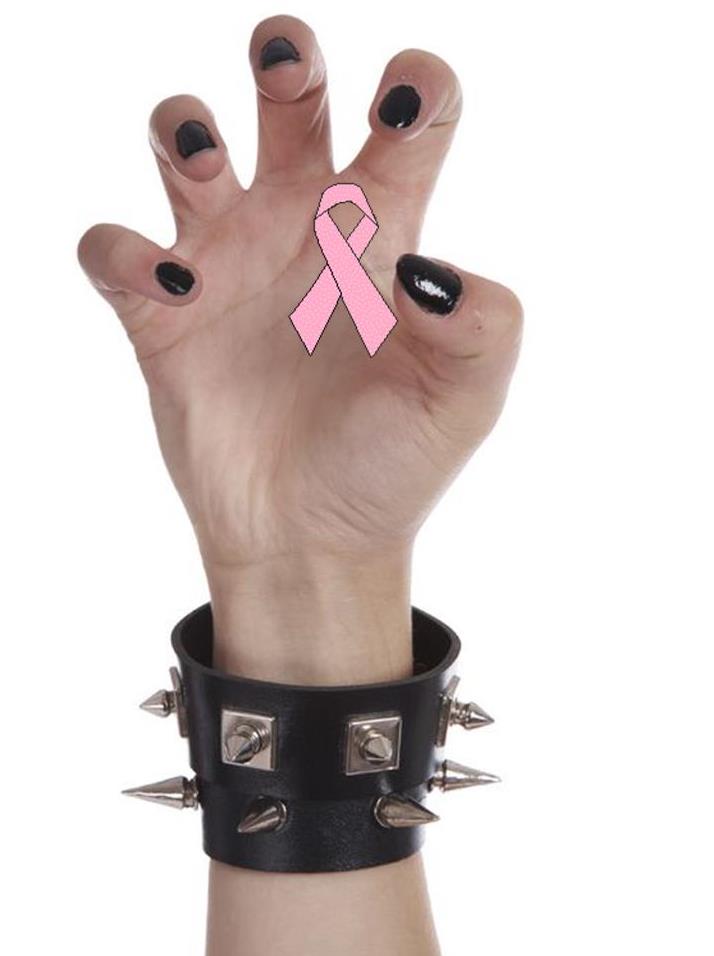
But I sit here today, waiting to get an MRI that will tell me if my cancer has returned, or if I’ve got a new one. I am utterly helpless, powerless, to do anything about it. The only activity I can engage in is to hope that I’m not joining the smaller number again, in this case the 30% of mets patients. Granted, my brand of hope is not the smiling Pink kind. My brand has a black rock group t-shirt, tattered jeans, black nail polish, greying hair, and a snarl. Because that is who I am—not an effen feather boa in sight.
What else can I do.
Turned Up To 11, Always
Marty DiBergi (Rob Reiner): Why don’t you just make ten louder and make ten be the top number and make that a little louder?
Nigel Tufnel (Christopher Guest): These go to eleven.
From “This Is Spinal Tap”
This is just another hissy fit post, similar to Did You?, but sillier. Well, sort of. I’m also serious, but don’t take myself too seriously.
In Did You?, I listed some questions people ask a cancer patient to find out if there was something the patient did or didn’t do that caused the cancer. That post is me complaining about the way folks love to blame the patient, so they can assure themselves that by doing the opposite actions, they will be safe.
But what is troublesome is that some of the items I listed that might cause cancer are pleasurable. For example, drinking, smoking, getting a tan, are indulged in for fun by some. And I’ll admit I find great pleasure in sweet foods, like chocolate and cheesecake.
My point is, with all the “advice” tossed off in the media and from well-meaning, but-won’t-shut-up-with-the-advice types, I sometimes twist it in my head into: never have any fun—it causes cancer or other damage. I get overwhelmed sometimes and grumble to myself, great, I think I’ll just ingest a leaf of lettuce and a gallon of water each day—nothing else, and maybe that will keep me safe. Except it won’t, because the lettuce was probably treated with some chemical and can I even trust where water comes from? Well, I suppose if I pay an arm and a leg for it.
I could extend the list of killer/fun behaviors, and extend the list of negative consequences to health problems beyond cancer. Nearly all the cancer-causing items cause heart or other disease. And I’m causing myself all kinds of harm by constantly being attached to some electronic, internet connected device. Hell, even my mobile has started to berate me.
I attach a speaker to my mobile via the headphone jack, and as I turn up the volume, a message appears about prolonged high volumes and headphones causing hearing loss (“you dumbass,” I wanna scream at the phone, “other things get hooked into the headphone jack, not just things that go directly into my ear!!”).
But the truth is, I already have quite a bit of hearing loss and it is my fault. As those who’ve read other posts on this blog o’ mine will know, I write a bit about music, and my tastes run to the loud and aggressive—lots of screechy guitars. I love punk, grunge, hard rock, hip hop, all kinds of ear-splitting stuff. I’ve loved that sort of music for over half my life and don’t foresee a change.
I’ve been going to concerts to see the bands that make this music for about 20 years now. Well, I haven’t gone much in the past ten years. But I did see quite a few bands, in small places, where loud music reverberated off the walls. And no, I did not wear anything to protect my ears, as many musicians and concert attendees do these days. So, that is how I’ve caused hearing loss. That, and turning it up loud in the car, windows up, singing along, and I’m told my music can be heard as I pull up in driveways. For me there are few pleasures better than the music being turned up so loud I can feel it in my bones.
I have difficulty on telephones when people do not speak clearly or speak too quickly. And why do so many people insist on talking to me when I am far away, walking away, or running water or doing some other noise-producing activity? I cannot hear any of it!
So, all this said, it would be reasonable for me to have learned a lesson, to turn it down a bit.
No.

I’m so tired of doing the “right” things. I am so tired of an extreme healthy culture that I feel like I cannot have any fun doing “bad” things. Yeah yeah yeah, exercise is fun, and I’m sure there are many healthy activities for me to find—please, don’t send me suggestions. Because nothing can replace as good as loud feels for me.
I have, of course, reduced some of my indulgences—I drink much less, eat better, exercise more, since cancer. I still get annoyed when I see health or money saving advice start with: quit smoking and give up soda (carbonated beverages, whatever they are called in whatever region). I never smoked and hate soda, and beer for that matter. So I cannot get a quick obvious start to getting healthier or saving money. And as much as I say I love cheesecake, I love veggies just as much, and have always eaten quite a lot of them, so the veggies are already added to the diet—they were always there. Just not at the same time as the cheesecake, ha ha.
I’m going to keep turning my music up as loud as I want. I will go to my grave—whether it is cancer that sends me there or something else—deaf as post and I will not care. Please don’t take this one last bit of bad fun from me. I need it to keep the fear cancer has introduced into my life at bay.
“Something else is hurting you – that’s why you need pot or whiskey, or screaming music turned so fucking loud you can’t think.” — Charles Bukowski
Get There Faster!
TV Re-Runs: Part II – “Friends”
A/N: This is the sequel to the previous post and was supposed to appear a couple days ago. But…I got a nasty head cold in between and am still a little out of it. So, that is why it seems late.
Tired of Pink pushers acting out the SNL “Mr. Short-Term Memory” sketch, I change the channel to another TV re-run: the ever popular, always-on show, mammography. What real TV show seems to always be on some channel? “Friends”! Not that there’s anything wrong with that. Yes, I’m referring to another popular syndicated sitcom. I’m happy both are often on, I like them very much. I cannot say the same for the constant mammogram debate always in re-runs.
I always have a difficult time when the mammography and over-diagnosis debate rears its ugly head. I was under-diagnosed. I received a false negative for my very first mammogram at age 38, which I requested because my 48 year old aunt had just been diagnosed. About five weeks later I was falling down the cancer rabbit hole with a 5×6.6 cm tumor. I’m left distrustful and bitter on the subject. I find it difficult to think about.
So when mammography gets discussed on a wide scale as it has been recently, I lose my temper quickly. The same old nuggets pop out: it is not a 100% accurate method of screening, it results in over-diagnosis and over-treatment, it makes no difference in mortality, blah, blah, blah. Then the articles written about a report pick it apart with paragraphs of numbers and what they mean, to show why the report is to be believed…or not. And so readers have to be wary and recognize that all that is written comes with biases, and as one article implied, some minds will never be changed.

My emotions make me just register white noise, so the science and evidence is difficult for me. It all sounds the same, and I think, wasn’t this just discussed? One recent article I started to read kind of had the same been there, heard that attitude, pointing out this controversy rises every few years. I was thinking it more frequent—like just last summer? But I think that controversy was removing the word carcinoma, reclassifying screening results—those things that may or may not turn into cancer. There is a real problem with over-diagnosis, I get that. I also get that last summer’s fuss was more about semantics and classification. But, mammography (and other screening methods, for other cancers as well) is still to blame in the matter, because that is how the may-or-may-not-be cancer results are discovered. So in my mind it is just part of the same old mammography story.
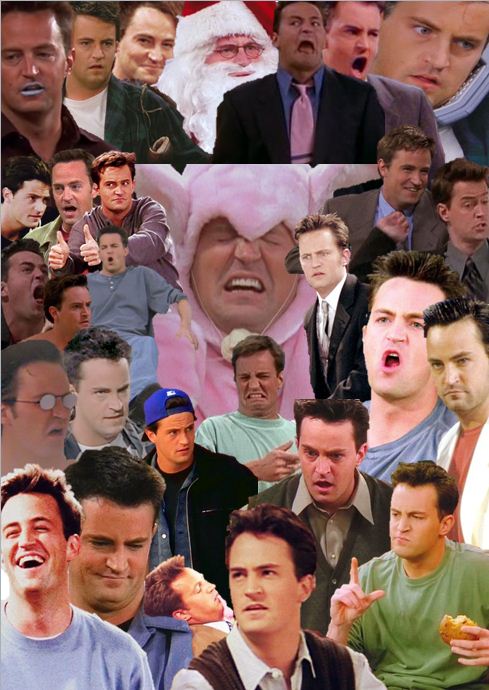
This is when I change the TV channel from SNL re-run to a re-run of the sitcom “Friends”. Remember loveable, cute, not-so-smart Joey Tribianni? He was always a few steps behind Chandler, Ross, Rachel, Monica, and Phoebe. Everyone else would “get” a joke or a point, and have to wait for poor old Joey to catch up. Late in the series’ run, there is a great episode in which Chandler and Joey are in the apartment belonging to Monica’s ex, Richard (sadly Tom Selleck is not in this episode). They find tapes, presumably sex tapes, labeled with female names. They find one labeled Monica. Chandler is instantly mortified, but Joey, well, he takes a bit longer to connect the dots. After waiting a beat, Chandler finally yells what viewers had thought for years: “get there faster!”
“Get there faster” is what I want to scream at researchers and reporters regarding this. Or maybe I wanna yell “get there faster” to everyone because I know the people involved in the endless studies done on effectiveness of mammography have nothing to do with other aspects of cancer—like why it happens, what to do about it, how to make not happen at all. As for those mammograms that find things that never turn into cancer? I guess the people crunching the numbers aren’t involved with solving that problem. I’m left thinking no one is even trying to find that solution. I’m sure it is being researched, it’s just the way that tidbit is mentioned as just one or two lines every time I hear this story, I’m starting to wonder why it isn’t THE story. I’ve read of a similar issue in testing for thyroid cancer. Seems to me determining if something is or is not cancer before treating is certainly a “get there faster” kind of problem.
I know how unfair I’m being with my frustration. I know demanding a solution RIGHT NOW is pointless.
Discoveries and breakthroughs don’t just happen on demand, or just because enough money is thrown at the process. I guess I’m just tired of this particular story grabbing headlines every few months or years…I really cannot tell how frequent it is anymore because I’m just so tired of it. Just like some TV re-runs.
I know other work is being done, in fact I recently saw interesting pieces about treating/preventing recurrence in the area of HER2+, very relevant to me. But that was certainly not broadcast in the mainstream media, as was the case with this mammogram study. Mammography always grabs headlines because it is the only thing the general, non-cancer public knows. Guess that is what happens when something is oversold.
And I know researchers work hard, and cannot think about the individual cancer patients, or potential patients, as they execute tests, analyze data, and all that.
But here’s the thing: I am one of those individual patients and as much as I try to see the big picture, some days I can’t. Some days I can only view everything through the lens of my own experience. So here is my view.
It’s true mammography did not work for this patient, diagnosed under the age of 40. It’s true I’m bitter about that. It’s true that this bitterness is a tiny part of my resentment toward the Pink message (but there are soooo many more things wrong with Pink, just dig around this blog). It is true I am NOT on the “a mammogram saved my life” bandwagon. Rather, I tend to snort each time I get a letter of “no cancer present” after my bi-annual scans: “yeah, heard THAT before.” So there is my bias.
But when the number crunchers start talking about how screening just finds disease earlier and does not change how long a person lives, the person is just sick for a longer portion of life, it is hard to hear. Even though it totally makes sense, it just seems such a hopeless statement to me. I don’t know why.
It is hard to hear these reports without a suggestion for a better method to replace mammograms. I know there are other screening methods debated in health media, but are they affordable and covered by insurance, available to even poor women, myself included? Regarding those options, if they are effective that is, I say get there faster.
While the two incidents have nothing to do with each other, it is difficult to put up with yet another onslaught of Pink rah-rah, this time in the form of the Kohl’s & Komen campaign, right after the latest repeat of another mammograms-aren’t-all-that story. Both just remind me that everything still seems to be in the same stagnate place as it has been for years. I had cancer, there is no news telling me of a reduced chance I’ll get it again. All will remain as it was before. I wonder if there even will be any changes in my lifetime. I don’t want to have cancer again. I don’t want to keep having the same Pink conversation over and over. Everything is just too slow. I want to change the channel from the cable networks that just show re-runs in syndication. I want the current season, but it does not exist.
All these years and it all sounds the same. GET THERE FASTER.
Short-Term Memory
TV Re-Runs: Part I – “SNL’s Mr. Short-Term Memory”
I’ve got cancer controversy fatigue.
It is only the beginning of March and already 2014 has had too many breast cancer controversies. The bizarre Keller attacks provided an interesting silver lining in that so many people defended the right of cancer patients to tell whatever blunt truth each deems appropriate to their experience, not just the media approved story, without getting hassled for it. I’d hoped the infuriating Pancreatic Cancer Action PSA controversy would provide another silver lining in the form of a general realization that 1) Pink has deceptively sold breast cancer as a desirable disease 2) patients with other cancers are so tired of the attention given to breast cancer that push back has begun. I still think push back will continue, see here and here, but the jury is still out on that one.
Are the voices challenging Pink Rule getting louder? Maybe, but it is business as usual according to the dominant voices in the breast cancer conversation. The most recent two controversies (is it just 2, did I miss something? I’ve been a little otherwise engaged lately)—the here-we-go-again-arguing-about-the-usefulness-of-mammography fuss, and is-it-October-again-already return of Pink commercialization—are just old and tiresome. They seem like TV re-runs. Or, more accurately, remind me I watch too many TV re-runs.
I’ll get to that mammography thing later, some other post maybe. Right now I just want to rant about the latest Pink hi-jinks.
Remember the iconic recurring sketch on Tom Hanks-hosted Saturday Night Live episodes, back in the late 80s-early 90s, “Mr. Short-Term Memory”? The little song at the start of the sketch said something like: he got hit on the head by a fruit, he shouldn’t have sat under that tree, he’s Mr. Short-Term Memory, he’ll drive you crazy when you talk to him but he’ll never know it, because he cannot remember anything. Hanks as the titular character would repeatedly forget why he was on the game show or why he was in the hospital, right in the middle of a conversation. The other characters had to repeatedly explain the situation to him, resulting in everyone having the same conversation about 5 times, to the exasperation and irritation of the other characters. Meanwhile, Hanks cluelessly acted like each time he heard the repeated story, it was brand new information! I loved that sketch, I still do. The sketch is funny, which is good since SNL is a comedy show.
Komen, Kohl’s, and any other Pink sellers acting like breast cancer is some kind of undiscussed elephant in the room reminds me of Hanks in those old Mr. Short-Term Memory sketches, but it ain’t funny. I picture all the marketing flunkies at both Komen and Kohl’s as Hanks/ Mr. Short-Term Memory, shouting “all these women are getting breast cancer?! Oh my gosh, we need to let people know about this!” It’s as if Komen is inexplicably ignorant of its own history and efforts. This is mind-boggling , until I consider the alternative. Maybe the flunkies think we, the shopping public, are plagued with short-term memory, and we forgot that barrage that just happened a few months ago. Impossible! Pink ribboned items hang around in my local stores up until at least the holidays, or after!

What the hell is talked about so much that folks with other cancers applaud that recent pancreatic cancer PSA, because they are so sick of pink ribbons being waved in faces (yes, that is an actual comment, scroll down to Martin, here)? As recently as a few months ago I was complaining about how so many folks—in real life, in comments sections, on social media—like to point out that 30 years ago breast cancer was only whispered about, and now…isn’t it great? Komen and other Pinked out groups have made it so we can talk openly about it! As if this is some kind of triumph! As if being able to talk openly about it was the end goal all along. Sometimes when people claim that all the talk of breast cancer shows how effective Pink has been, I have to shove my hands in my jeans pockets so I don’t grab their shoulders and shake them and scream: “don’t you get it?! I don’t want to TALK about breast cancer—I want to makes sure it doesn’t come back in me—I want to have never had it at all!”
But I did get breast cancer, and I’m stuck repeating myself (I’ve noticed I keep re-posting old posts lately, geez, I guess I’m not just watching re-runs on TV, I’m putting out my own re-runs!). I feel stuck listening to the same conversation over and over, because the biggest Pink gorillas cannot seem to move forward. Komen & Kohl’s awful Pink website page filled with conversations starters are just the same old warmed over topics that’ve been discussed to death. No mention of Stage IV, the misguided idea that cancer is beatable with no mention that it is so likely to recur (as Stage IV, again ignoring that reality, duh), and of course, other pretty pink-i-tudes, like the notion cancer is a gift, something desirable (gee, no wonder those silly pancreatic cancer patients got confused—YES I’M BEING SARCASTIC). There is even the chance to win $50 from Kohl’s by sharing a personal breast cancer story. Even this idea is old news—it is just another version of the “only the positive stories get to the podium” phenomena so ever present in cancer tales. (Because a Cancer Curmudgeon-y story is unlikely to get a podium or prize.)This really burns me up, but I have to submerge that anger for some other day.
Using these proffered conversation starters that have already been discussed into the ground will just make the conversation about breast cancer look as silly as Mr. Short-Term Memory’s rants. Coming so soon after the pancreatic cancer PSA fuss, a marketing campaign that encourages folks to talk about breast cancer like such a conversation has never happened before is beyond tone deaf. I realize that this campaign is the result of too much time and money to simply cancel it after the pancreatic cancer PSA, but if Komen and Pink pushers had been paying attention to the growing grumbles in social media and even the mainstream (I guess that Orenstein article was just TL;DR for those involved with this campaign), maybe they’d have thought twice before developing this travesty.
So many have already eloquently spoken about the Komen & Kohl’s theft of elephant concept from METAvivor there is nothing to add. I was outraged at first, but now I step back and find I’m not even all that surprised. Pink pushers are so unable to move forward in the conversation regarding breast cancer, of course they are out of new ideas. Realizing this, I think to myself, is it any wonder they had to steal? Last I checked, METAvivor is still disappointed that K&K are Unwilling to Do the Right Thing. Too many resources stand to be wasted pursing legal action, but given Komen’s litigious history, perhaps “lawsuit” is the only language they speak?
I’m not suggesting that all the #talkpink turn into #STFU. It’s just that breast cancer is still such a huge problem that has not decreased in proportion with nearly 30 years of “talk”. Nothing has improved in terms of death, of mets patients. Doesn’t that seem like a conversational shift is needed? I’m not as specifically anti-Komen as some folks. Rather, I tend to get so incensed by nearly all Pink/rah-rah entities, or hell, ribbon and disease-of-the-month culture as a whole, that I sometimes cannot discern the individual pieces of the puzzle. Then my knee-jerk reaction is: “it all sucks!” But Komen really is The Worst this time round.
I think Kohl’s reached their goal—sorry, I cannot linger on that site enough to even understand how the shopping/donation process works, I was just too grossed out. I have not shopped there in years—as a pet/house sitter, I simply do not require their goods. So it was easy for me to boycott, and because it was so easy, I feel strange or hypocritical suggesting others boycott. I’d like to NEVER buy anything with a ribbon on it but it is damn near impossible in the case of some foods I like. I wonder if the backlash directed at K&K is enough to alter the next big Pink selling bonanza surely in the works? How many serious missteps like this will it take to end Komen? Part of me wishes someone would take them aside and clue them in, and that they’ll listen—simply because it is so hard to watch Komen embarrass themselves even though I cannot stand them. But the imp in me says, “hey, give ‘em enough rope….”
I wish I knew a solution to the over-abundance of Pink and all that comes with it. I only know I can no longer watch all these Pink re-enactments of the “Mr. Short-Term Memory” sketch.
Did You?
Did you smoke, and for how long?
Did you drink, how much, how often?
Did you have kids?
Did you use a tanning bed?
Did you even try to lose weight?
Did you take hormones or the Pill?
Did you eat enough blueberries?
Did you eat tomatoes?
Did you eat meat?
Did you buy organic?
Did you eat a lot of sugar?
Because if you have cancer, you did it to yourself.
Several days ago, Dr. Otis Brawley of the American Cancer Society wrote on some news site that most cancers are preventable and made bullet points of the usual laundry list of prevention measures. He did not say that everyone, or me personally, Curmudgeon Q. Cancer Patient, had brought cancer upon themselves/myself. But I still feel a zing when I read or hear this sort of thing. I am still trying to figure out why I get that zing.
Now, I know should avoid comments sections on mainstream news media sites. They cause me much stress—another cause of cancer, naturally. So why read them? Well, it does give a glimpse into how and what people think. Of course one person whose husband died from cancer protested the idea her husband brought it on himself, and another responded along the lines of: all these damn cancer patients are too sensitive, this article isn’t blaming them.
Ah there is the rub. Why are we sensitive? Well, because we get asked those questions I just listed at the start of this post, and more. A lot. Or at least I did. And yes, I brought some of the paranoia on myself, every time I looked at a magazine cover while waiting in line at the grocery store, each one touting some food I hate (fruits, including those cursed tomatoes) as a sure fire way to prevent cancer—and it usually says “prevent”, not “lower your risk”, at least on the cover, the story changes a bit on the pages inside.
Yes, I know, breast cancer patients are not blamed for their situation as much as lung cancer patients or people with heart disease. I just read another article about the latest mammography mess in which the journalist pondered how women think of heart disease as a result of bad behavior, while breast cancer is considered something bad that happens to women. I really have a hard time with this particular misperception that I see in articles more frequently than I’d like. Because from where I’m standing, when I got asked those questions, there was a flicker of a suggestion that this cancer did not just “happen”, but rather, I’d engaged in actions or non-actions that resulted in my getting cancer. I think that could be called blame.
I constantly see pieces linking smoking, and especially alcohol, to breast cancer. Yes I see it more than average folks because, you know, I had breast cancer, so I hone in on these items. But I am sure a few others are seeing it, and it is getting lodged at least in the subconscious. Well, OK, maybe not, given that most local breast cancer fundraisers in my small town are sponsored by bars and other businesses selling alcohol, and yes, alcohol is generally served, never mind all the chatter about alcohol causing breast cancer. Ugh, that is a post for another day.
It’s just that, for anyone to think most people, even on subconscious, unspoken levels, are not blaming the cancer patients, any cancer patients, for getting themselves into their fixes, it’s just…naïve. We must be blamed, we must endure those insulting “did you do this, did you not do that” questions. Some folks MUST blame us, because it is the only way they can assure themselves they’ll be safe from cancer. Anything they do that is different—eating, drinking, having kids—well, that is the get out of cancer free card, isn’t it? If only that were true.
What will it take to end the blame the patient game? Maybe cancer patients are too sensitive, but there is a reason. Too bad sensitivity isn’t transferable to others in need of it.
So, This Is Where Pink Has Taken Us
Don’t you hate that jackass that says “I told you so”? Then hate this jackass Cancer Curmudgeon. Most breast cancer bloggers I follow rightfully point out that the over saturation of Pink is the direct cause of the cancer envy on display in the Pancreatic Cancer Action PSA. But the envy is not new. I hope that this ad will wake up those folks who need to understand that Pink Ribbons have become insufferable. Here is what I said about it a few months ago (this is where “I told you so” comes into it).
What Do You Mean There Are OTHER Kinds of Cancer Besides Breast Cancer?!
Posted on October 31, 2013 by Cancer Curmudgeon
Or: Shoving Pink Down Your Throat
Yes that title is sarcastic.
The topic I have not seen addressed much in breast cancer and Pink discussions is resentment patients with other types of cancer have towards all things Pink. It is possible it is being discussed and I’m not seeing it, however, given I can barely bring myself to read about this topic much lately. I find I’m unable to read even essays criticizing Pink; I cannot read another list of the outrageous products/corporations aligned with Pink, each pointing out a new lowest of the low in the most absurd use of Pink as marketing tool, most preposterous item turned pink. I can see it for myself on the rare occasions I venture into a store, or if I’m accidentally near a TV, or use the internet—which means seeing the ridiculousness is unavoidable.
I confess that in the past year or two I’ve been so swept up in my own resentment toward Pink that while I was vaguely aware that some patients with other kinds of cancer were also sick of Pink, it is only since maybe September I’ve begun to grasp the depth of the resentment, and yes, I think I even saw near-hatred the other night. It pops up on a variety of social media, and many are just expressions of frustration, questions as to why this or that colored ribbon/cancer doesn’t get as much attention, or exasperated reminders to not forget, well, name any cancer associated with whatever month, I’m afraid to try to list for fear of omission. One painful post from a patient with a gynecological cancer proclaimed October to be the time of year in which every day is devoted to telling the world only one kind of cancer matters. The phrase I see quite a bit from patients with other kinds of cancer is “shoved down our throats” in reference to Pink and pink ribbons.
This is what Pink has come to; some perceive it as edging out absolutely every other disease and cause in an obnoxious way, and one’s perception is his or her reality. It is not exactly clear who these patients hold responsible for all this shoving down of the throat. The pieces I’ve seen and read do not seem to differentiate between products with ribbons on them (the kind that claim to send a few pennies to a charity or the ones that just have a pink ribbon with no such claim), pink parade-like races, or people wearing anything from tiny pink ribbon pins to head to toe pink-logoed ensembles. Perhaps it appears all the same to the very frustrated. Well, one delightfully profane post did flat out accuse some folks of slacktivism in matters of pink clothing and accessory choices.
I highly doubt it was the intention to detract attention from other cancers or issues, but it happened, now what’s to be done about it? Why should these patients with other kinds of cancer—being overwhelmed with their own diagnosis, and underwhelmed with support systems or websites catering to information about other kinds of cancer—make the differentiations mentioned above? Is it fair to expect those who bewilderedly ask, “why does Pink get all the attention?” to seek out the answers that have been written about mostly in breast cancer related articles, such as the lucrativeness of Pink and the juvenile enjoyment society gets from talking about boobies? Is it right for a breast cancer patient to complain about Pink and all the so-called wrong kinds of attention it attracts, when all these other cancers get little to no attention, and want the attention and more importantly, the funding for research that goes with a stupid colored ribbon?
While I may be a jackass, my aim here is NOT be so insufferable as to presume to speak for those with other kinds of cancers. Even if I were to now get another type of cancer, I’ve already had breast cancer, so to society, I am inextricably linked to that damn pink ribbon, no matter how much I scream and stomp on it to reject it. And anyway, I am incapable of speaking for anyone else at all; I’m barely able to speak for myself half the time. But I’m still not always able to shut my mouth.

Since diagnosis I’ve been aware that the cancer center at which I was treated bathed the building in pink light each night in October. It annoyed me before, but this year, reading about all of the throat shoving, I think differently. I do not know why the lights are turned pink this month, there are no signs outside the building proclaiming fundraising goals or awareness slogans. It is a small town cancer center—no research or breakthroughs to benefit all breast cancer patients the world over are going to happen there. I’ve inquired about the reason in my comments to the center I made recently. I do not understand the need for breast cancer awareness…at a cancer center, for crying out loud. A building that exists as a place to treat cancer patients is the epitome of all cancer awareness. Thus, a pink light becomes overkill, a pink light becomes the favoring of patients with breast cancer—their lives? their money?—over all other cancer patients, a pink light becomes the shoving of a cause down many gagging throats.
Perhaps I am the only one of thousands of patients treated at that cancer center that has interpreted the pink light this way. Perhaps others do see it that way and just don’t care, or don’t think it worthwhile to say anything and I’m sure I come off as another “selfish” breast cancer patient biting the hand that feeds. But, unless that light is doing something other than just doing the same old “breast cancer awareness” where awareness is needed least, I cannot help but think it is a bit insensitive to patients with other kinds of cancer. I have a hard time believing I’m the only one thinking this, and maybe my complaint combined with others can get attention and make a change. But I’m a Cancer Curmudgeon, a misanthrope, a socially awkward grouch always saying the wrong thing, so I doubt it. I do not like putting much effort into something that doesn’t produce visible results, which is why I’m so frustrated this year that given all the activity by those criticizing Pink, like that Orenstein article, there has been little to no reduction in Pink silliness (at least in my area). I do not feel good about myself for speaking up; I don’t even know right now what drove me to do it. But I don’t really regret it either, even if it was not my place to say anything.
I wish everyone pushing Pink would become less obtuse about the scorn, frustration, and ill-will it now provokes. Awareness is a two way street, maybe it is time to re-assess this old pink ribbon to see if it really is still working. Some folks are oversaturated with it, and others are still clueless about too many aspects of breast cancer. I’ve written about that before (Failure of Awareness), and maybe will again. I see comments saying something like those complaining about Pink cannot deny how effective it is. Effective at what? The stats as to whether breast cancer incidence and related deaths have been reduced, increased (falsely inflated by classification of DCIS), or remained the same have been covered by others, and I’m not qualified to go into that. But the fact remains people still get breast cancer, I still got it, people still die, and while the treatments, especially Herceptin, developed as a result of Pink dollars and awareness (YES, I GET IT, and I AM grateful) keep me alive, for how long? The same problem is still here, just more people know about it and it is acceptable to talk about it. And they know about it and talk about it to the exclusion of every other cancer.
And what will be the fall-out from the undercurrent of Pink resentment from the patients with other cancers? As much as TV medical talking heads like to point out that heart disease and lung cancer impact more people, breast cancer still occurs in a hell of a lot of people, meaning there are too many potential customers willing to buy treatment and Pink crap for Pink to lose any power. And c’mon, how will our culture ever ignore boobies? So the backlash may not get anywhere, but that does not mean this resentment should be ignored.
Want Attention? Just Say Breast Cancer
2/7/14 edit & author’s note: When I write, I assume readers are residents of cancer land and are aware of the latest, um, “dramas”, that are going on in cancer land. But that is unfair, and I’ve been made aware that I should include links to what I am ranting on about. I’m reluctant to do that most of the time because I don’t always want to give something that annoys me more access for more clicks–especially in this situation, because what I’m writing about here is the dubious methods employed for getting attention! But my desire to be clear about what has driven me to write about any topic wins out, so here is a link to the Salon article that made me aware of the Pancreatic Cancer Action PSA, and the PSA itself can be watched there as well. Happy viewing!
What is the best way to push your agenda? Just say breast cancer.
You can push your questionable prevention advice with this fear-mongering because everyone will listen. (I ranted about that a lot last summer, if you enjoy rants: 1, 2, & 3, all about how one report used fear of breast cancer in a title to talk about something else, and yes, I acknowledged even then that I was contributing to the attention.)
You can insist that your disease is more important because it kills more people than breast cancer—I’m looking at you, most heart disease-and-women campaigns. February is almost as annoying as October, since everyone honks about breast cancer to highlight how heart disease kills more women than breast cancer. As if everyone was not already tired of the phrase breast cancer. Because the only way to advocate one cause is to smack another down, apparently.
You can imply all your cancers are worse because of lack of funding and awareness because the Big Pink Ribbon Bully stole all the attention. As I’ve said before, breast cancer is a bully that is now being bullied—payback is a bitch. Everyone is tired of all the attention breast cancer gets, yet no one will shut up about it, myself included.
I’d like to say the best way to handle the pancreatic cancer PSA is to ignore it, because the backlash and buzz is drawing attention—no doubt that is exactly what is desired. It just proves my point: want attention? Just say breast cancer.
But ignoring it is wrong. Of course pancreatic cancer needs attention. And frankly, I have heard or seen people with other cancers comment that they wish they had breast cancer, instead. I don’t presume to know why, but I can guess. So the statement in the ad was no big surprise.
But I’ve also read one blogger’s thankfulness to have a gynecological cancer rather than breast cancer (sorry cannot remember who or where, cannot locate), because of all the silliness and sexualization around breast cancer, knowing she’d loathe the pink ribbon even more if she had breast cancer. She’s glad that at least her cancer is taken seriously. So there’s that too.
This is why I hate all the colored ribbons—it just creates a divided cancer gang land. Gotta be true to your colors. No thanks. People are sick and jealous of the attention breast cancer and Pink hogs (see What Do You Mean There Are OTHER Kinds of Cancer Besides Breast Cancer?!). Understand why Pink is doing more harm than good yet? Understand why Pink-coated-everything has got to stop? Understand why that ribbon does not represent this breast cancer patient?
When I was treated for breast cancer, I was not ushered into a separate room with pink champagne, cupcakes, feather boas, and a party atmosphere. I slogged it out with patients with all kinds of other cancers. Just because so many people think they know all about breast cancer (NO) because they’ve seen a few Pink ads, breast cancer patients still have to get the same (slightly better than past years) slash, poison, and burn treatments many other cancer patients get. What non-breast cancer patients are NOT aware of is the fact that there is a good chance it will come back and kill me—I’ve heard that twice in the past several weeks from two different doctors who are involved in my cancer care. That is Pink’s dirty little secret: breast cancer still makes a person sick, the treatment is still horrible, and it still kills.
Dead is dead, regardless if it is from pancreatic, breast, prostate, or ANY cancer. Can the conversation, the message, the fall-out, from the PSA be an understanding of this simple notion?
No, because I’m sure there will be a segment of people thinking breast cancer patients, with our alleged advantages, should just stop whining, stop stealing pancreatic cancer’s thunder, stop insisting we have it just as bad, because in their eyes, we don’t have it as bad, no matter what we say. Because I know folks with mets breast cancer, or other cancers, have thought me lucky. I’ve thought it myself. I wrestle with it all the time. So should I shut up about this PSA? Is this what breast cancer patients should keep in mind before talking about this PSA?
At any rate, the PSA worked, because it invoked breast cancer. Attention, guaranteed.
Thank you Pancreatic Cancer Action, for reminding this breast cancer patient to not shut up about the horribleness of all and any cancer, equally. Thank you for reminding everyone just how much work there is to do, for highlighting just how badly Pink has failed in conveying the gravity of getting a breast cancer diagnosis, and for showing how un-classy it is to smack another down to lift your own self up.
 anotheronewiththecancer