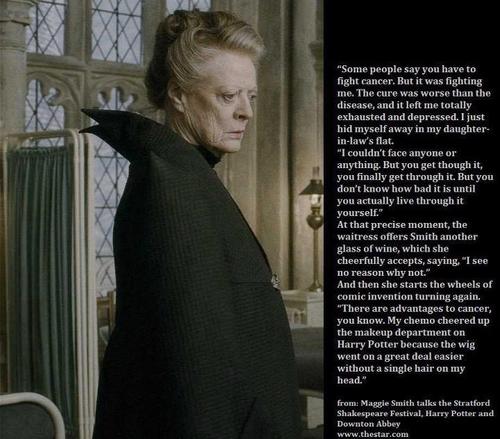
Finally, a celebrity worthy of admiration (most of them suck)
Finally, a celebrity worthy of admiration (most of them suck)
Found this on some other blog, NOT in reference to cancer, but it kind of fits, doesn’t it?
You have a right to need things from others.
You have a right to put yourself first sometimes.
You have a right to feel and express your emotions or your pain.
You have a right to be the final judge of your beliefs and accept them as legitimate.
You have the right to your opinions and convictions.
You have the right to your experience – even if it’s different from that of other people.
You have a right to protest any treatment or criticism that feels bad to you.
You have a right to negotiate for change.
You have a right to ask for help, emotional support, or anything else you need (even though you may not always get it).
You have a right to say no; saying no doesn’t make you bad or selfish.
You have a right not to justify yourself to others.
You have a right not to take responsibility for someone else’s problem.
You have a right to choose not to respond to a situation.
You have a right, sometimes, to inconvenience or disappoint others.
This is a huge issue, and it is scary it is not at the forefront of discussions with every woman. Women with breast cancer–regardless of their density–should know about this, yet, not all do. Why?
A hefty thanks to my good friend AnneMarie over at Chemobrain for alerting me to this topic. She wrote this post about a newly minted law in New York. I’m purposefully ill-informed about such current events; I don’t watch the news and I cherry-pick which stories I follow because the local news is full of big-city sensationalism and the national news wears me out, particularly with the uptick in political/biparty bickering. When election time rolls around, I do some concentrated research on my local and national candidates, but don’t need all the buzzy asides about which congressperson is misbehaving or which serial killer is still at large or who eye-rolled whom. As my wise friend Amy Hoover says, I know about all the current events in my home, and that’s enough to keep up with.
The news of the new dense breast laws did catch my attention, though, thanks to AnneMarie…
View original post 1,416 more words

Well it is that time again; my every-6-months-appointment with the oncologist to monitor my post-cancer body is over, and I can breathe for another 6 months. I kind of hate this 5 year time line in which I need to see the oncologist this frequently; it’s not like I will magically be off the hook after 5 years, although I recognize the statistical probability that it is more likely to come back within 5 years than after. Yadda, yadda, yadda.
My fellow IRL post-breast cancer patients get mammograms every 6 months, just prior to their visits with their oncologists, from what I understand. I only do it once a year; at the other 6 month point I get an MRI. I had to fight a little bit to set this up. When my doctor was explaining my schedule and telling me I’d have mammograms every 6 months, I had to push on the brakes, and ask if some other form of imaging could be mixed in, due to the fact that my first ever mammogram was a false negative. Immediately, he went into the canned speech of a mammogram every 6 months being the protocol or standard of care or standard operating procedure or whatever they call it. I was like, yeah, I fell outside of the norm in diagnoses with that false negative (only 20% get that), and we need to think outside the box for my care.
Sigh. I know the medical world, and most worlds, are constructed to come up with a plan for the majority—majority rules! But there are just some instances in which the plans need to be tailor made for an individual. I think cancer falls into that category. My doctor is wonderful; I know he cannot keep track of all the details of each of his many patients. I just wish he would put a little sticky note on the outside of my file that summarizes the big points of my case, like the false negative point, so he could remember that. It was certainly a big sticking point for me—to think all is well after that milestone of “my first ever mammogram” only to find out a few weeks later that all is extremely far from well was a real kick in the ass.
The first post treatment mammogram I had last January was not too harrowing; I’d just finished the Herceptin infusions, I’d been seeing someone in the cancer center every three weeks, so I was not worried. I was not even real concerned when I had the MRI in July; it was clear, and I was pretty sure it would be. I’ve been told one gets a little “antsy” when emerging from that cocoon of constant cancer care. Since my cocoon lasted much longer because of the year-long Herceptin treatments, I experienced less of that, I think. But I do get uptight now when the 6 month time bomb approaches.
Naturally, this time round the mammogram had to hit some bumps in the road. I went to the same facility to have this year’s mammogram as the previous year, and the building is literally across the parking lot from the cancer treatment center, I’m talking a few yards. Yet, I was asked by the technician my entire cancer history. I say to her “You know, I’ve been here before, post treatment, even! This medical group/hospital system/whatever has all of my records. I did not bring my own cancer notebook full of dates and details because common sense would imply that this facility would have all of this info.” I was annoyed because she was making assumptions that there was a long lapse in time between first mammogram and diagnoses. Finally, I just recited my general timeline, and I emphasized that 1) it was about a month between the “all clear” and the “you have Stage 3 cancer” messages I received and that 2) it was this facility that gave me that horribly incorrect “all clear”.
But getting these facts out in the open was a good thing. The technician was a fellow false negative breast cancer patient herself, which put us on the same side, she was truly sympathetic to my story. This was a great improvement over the technician last year, who kept opening my robe (I prefer to open it myself, I do not want them to touch or remove my clothing, or in this case, cheap-ass institutional covering), then stopping to yammer about breast health rather than putting my breast in the machine, letting me just stand there uncovered.
Now, I don’t know if it was the fact that I was clearly not a fan of mammograms or if the Interpreting Radiologist (the unseen person, who sends the technician in again and again to re-take the image, I guess they are the great and powerful Oz?) was truly having a difficult time getting a clear image, but images of my left breast—yes, the one that had the surgery, the scar, the one that hurts—kept having to be re-done. It was excruciating. Finally, it was decided an ultrasound was needed.
While I understand and respect the need to have a better look by getting different types of images, it was still frightening. My experience of breast cancer world is, if more images are needed, there is a problem, no matter how many times the technicians assure the patient that taking more images does not indicate a problem.
So I wait a nerve-wracking week after imaging to discuss this all with my kindly oncologist. The night before my appointment, I open my results from the Interpreting Radiologist, telling me there is an “area” that is “believed to be benign”, but I should follow up with another test in 6 months. It is a form letter, it does not take into account that I am a damn cancer patient, I have to be tested in 6 months anyway, regardless of what she saw. I know these letters are just the way radiologists are covering their asses these days, so they can go back and say, “hey we informed the patient of the findings, it’s now all on them”. I get it, but it still sucks to get that letter.
But all’s well that ends well. The visit with the oncologist reveals that blood test showed my cancer marker to be decreasing since the last test, and the offending “area” is scar tissue and/or a mole. So in other words, my status is still NED, and that “area” will probably always be a problem. So it was much worry for nothing. But I am glad it was nothing. I will always rather have the stress of extra testing with an end result of “all clear”, than skip the extra test, get bad news later, and forever wonder if finding out earlier would’ve been better. I grimace every time I see someone comment on a blog about how stressful it was for them to get an “unnecessary” biopsy, that the medical staff are over-testing (which insurance companies think is happening, even when it is not), the “agony” they went through to get the negative results. I always write back: “you want stress, try going through the week of waiting to get the classic ‘you have cancer’ answer, then we can talk about stress.” I even kind of had to say those words to myself this time round, after getting that extra test for “no apparent reason”. Better safe than sorry—wow an old cliché that is very true!
I’m not especially good at remembering dates anymore. Some of my cancer dates I remember, some I don’t. I have no idea when I began chemo other than sometime in November 2010, but I know my last chemo infusion was April 8, 2011, and that my last Herceptin infusion was Jan 13, 2012 (a Friday the 13th, whoooo). I was elated to be finished with radiation, but I will never remember the date of my last one, although I know it was an incredibly hot Friday, the final week of July, so hot that I did not mind walking dogs in the pouring rain late at night because I was so hot and sweaty I just wanted to take a shower. An outside rain shower was totally ok.
This means any Friday the 13th is lucky for me, not unlucky. And any incredibly hot day, I will link it with a cancer memory. Curse you climate change…all these damn hotter days!
The weirdest memory however, will be related to my lumpectomy: April 29, 2011, the day Prince William married Kate. I am not fond of the Royals, and the wedding was not of interest to me, but I was forced to watch it, getting up so early for surgery—it was the ONLY thing on. That day was one of the worst of my life, and the laugh I got out of Princess Beatrice’s hat did not alleviate it all.
That day, my surgery was scheduled for 10:30 am, and I had not eaten for over 24 hours, and of course I was required to be at the hospital at 7 am—classic cancer hurry up and wait. A couple of emergency surgeries pushed my time back to 3:30 pm (apparently my surgeon is the only one who could do it? I cannot fuss, she is good and if I had an emergency I’d want her). I am not the most pleasant person when hungry. Not that it mattered much, because the surgical nursing staff pretty much ignored me. There were two magazines to read, nothing to do but worry, and all the fluids given to me via IV to keep me hydrated made me need to pee, which is quite a job when prepped for surgery with a million tubes attached to limbs. If that were not enough, it was discovered the person who did my ultra-sound-guided biopsy for my initial diagnoses failed to put a “marker” near the tumor. Since chemo worked so well, there was no definable tumor left, making it doubly difficult for the surgeon to figure out exactly where to operate. So I was stuck getting repeated mammograms to make sure there really was no marker in there. What fun. And then of course came the six needles in the nipple to put the dye in my system. It was the single most painful thing yet—physically, mentally, and emotionally.
It is now odd how much I am forced to remember the days of and following my surgery. For example, Princess Kate’s recent pregnancy that got all of the internet and news outlets in a tizzy for several days this summer sent me down memory lane. My first reaction was, they have only been married a few months…and then I realized it was over a year…same amount of time since I’d had surgery. Time flies when you’re having cancer.
But the single strangest reminder came a few days ago, watching Zero Dark Thirty with my mom. The film puts important dates on the screen, including the day the SEALS killed Bin Laden, May 1, 2011. Mom turns to me and says “do you remember all this happening?” *Note: Let me explain my mother is not interested at all in history or current events, or even pop culture current dramas.
Well, yeah I remember the news of Bin Laden’s death! It was an important enough event that even though I was drugged, in pain, and annoyed at the stupid drains under my arm, I was very aware of what happened. In fact, I kept trying to watch the news in the days that followed, but I do not do well with anesthetic, so the crawl on the bottom of the TV screen made me sea sick. I feel like I got cheated of this American moment because I was too sick to see it on TV. When I say all this to my mom to put the event in context for her, she gets huffy and says she does not remember because she was supposedly taking care of me (I actually needed little help at that point, whatever, ha ha).
I honestly don’t know if this way of remembering is good or bad. On one hand, something like a triumphant moment in history is linked with a very bad memory for me. But with chemo brain stealing my ability to remember things, maybe having these shortcuts to my memory is a good thing. Who knows.
In the past few weeks I posted pieces on why I blog, and why I’m doing it now rather than when I was going through treatment. I guess the last part should be an explanation of why I am a self-proclaimed cancer curmudgeon. I’ve updated my “About” section to shine a light on my current philosophical stance toward (breast) cancer and the American medical industry (the curmudgeon part). And what follows below is an expansion on that
Above all, I’d like everyone to know that I am grateful for staying alive during cancer, for the drugs (made possible by research dollars from the pink ribbon behemoth) and health care team that keep me that way, and all the support I got and still get. But I do not think being grateful means that I, or anyone, should stop asking for improvements in cancer care and prevention. I demand of science more concrete cancer prevention methods than the “eat right, exercise, don’t drink or smoke” mantra that also helps prevent practically every damn human disease. I think it is ridiculous that the recommended action for a woman with an increased likelihood (like a gene mutation) of getting a gynecological cancer is removal of woman parts. I mean, if I had a gene mutation making me likely to get brain cancer, should I remove my brain? An absurd extreme, yes, but see my point? I realize that cancer is a complex, difficult to understand illness, but after thousands of years of knowledge of a malady we now call “cancer”, science should be further along in the understanding of it all.
*Note: Dude, I’m not even going to follow a thought about how often prostate or testicle removal is performed in comparison to female reproductive organ removal FOR PREVENTATIVE REASONS, because I know it will involve a lot of figures about which cancer occurs more often, and numbers about why science researches one over the other, women’s vs. men’s health issues, blah, blah, blah, so I went with brain cancer in my example—cancer has got to stop dividing men from women, we already feel the healthy-from-the-sick division too much.
I know things like gene testing and radical surgery are the only tools in the box the medical industry has to use against cancer right now, and the industry, as well as patients, want to be proactive….testing and surgery give the illusion of “doing something.” So I understand why the test is sold as something that can provide more info for people like myself, who like to gather as many facts as possible before making decisions. But transparency is in order…like if an oncologist recommends Tamoxifen for 10 years, up from the current recommended 5, to a patient, the patient has a right to know that the study that recommends this was funded by AstraZeneca, makers of Tamoxifen (full disclosure, since I was EP negative, I have no self interest in the Tamoxifen debate, just a personal one, as I researched it on behalf of my IRL cancer buddies, because I want to fight to make sure my friends get the best breast/ovarian/female cancer care available). Women who plan to take the BRCA test need to know how rare gene mutations are, and need to know that the mutations only increase risk of getting cancer, the mutations are not the cause (only if they combine with a bunch of other stuff, like environmental factors, which hurt and cause cancer in everyone, not just those with gene mutations).
All I’m saying, is how can I help add tools to the cancer-fighting toolbox? Other than donating money, because cancer has all my money now.
I’ve received a few inspiring comments on recent posts. In the event that other readers have not commented, don’t read comments, and have some similar thoughts, I thought I’d better put a quick post up about a couple of things.
I was sent a couple of links to stories about Ms. Rose, the Miss America contestant who is getting the bilateral mastectomy. I did not, and probably will not investigate her case too much. I simply heard her story and passing and let it inspire me to continue my reflections on the decisions I made in my personal experiences. Ms. Rose is not the first minor celebrity to do this (did we not just witness something similar with Sharon Osbourne—I’m fuzzy on her medical facts; I am more interested in the human nature aspect; as in her actions and the media reported reaction), and I doubt she is the last. However, for those paying more attention, the two measly articles I read implied Ms. Rose did not have the BRCA gene, which is impossible, everyone has the gene, the key is in the mutation. I urge everyone to get facts about this from reputable resources. It is possible the articles were engaging in a kind of verbal shorthand, much in the way that retail or movie theater employees ask us for donations to support breast or childhood cancer. Who the hell “supports cancer?” What they really mean is to support research or the fight against cancer, but we as a society get lazy and cut out a few words. Hey I worked in retail for about 20 years; I know how tiresome it gets to ask, for the millionth time in a day, for more money from a customer…while they give you money. It sucks. But now as a person with an up close and personal knowledge of cancer, it annoys me. I would never “support cancer”, and I think it is important to be clear and use proper language when talking about cancer.
Speaking of being clear—I am worried that some might think I am not grateful for how lucky I am in my cancer outcomes. Believe me or not, I am. I know it could’ve been worse, I have personal experience with friends of “worse”, but I do not feel the need to use their stories to quantify my gratitude, it is too private to me and to them. I hope readers can be ok with that.
I will have a little more about gratitude and how it relates to my views in future posts.

Thank you Coen bros. and Clooney for my cancer motto: “Damn we’re in a tight spot”

 anotheronewiththecancer