Another Unfortunate Repeat
It’s not that I don’t want to write new stuff, it’s that the same old issues keep rearing their ugly heads and my mind remains unchanged since I originally posted. I wish I could be convinced otherwise on nearly everything I write about here, but that almost never happens.
What is getting my goat, and many others’ I suspect is the DCIS mess and the even more recent mess about unnecessary mastectomy. The DCIS is annoying because of the rush to reclassify without having a concrete way to figure out if it will become cancer. But what really makes me nuts is that I learned of the JAMA thing via a NYT Wellblog piece and that little factoid was not listed until the 13th friggin’ paragraph. You know, where the average reader will miss it.
Sure maybe most women with DCIS will be OK, and maybe most women don’t need mastectomy. But some might. Once you’ve been outside the stats, it is really hard to trust even the most hallowed medical opinions. This trust for me has been recently re-shattered, and I may write about it in the future, it is tough for me emotionally right now. Until then, re-read this.
Outside the Stats
Posted on April 24, 2013 by Cancer Curmudgeon
I recently attended a breast cancer conference, intended mostly for medical professionals, but patients and caregivers were welcome too. Many aspects of this event warrant posts, but I’m going to start with an issue covered at the conference that is out of my area of experience. I know it is covered by many bloggers who are far more knowledgeable than I, having actual real life experience in the matter, whereas I am writing about something I did not do. I hope everyone understands that I am empathizing here, and hope no one thinks I do not have the right to discuss this topic.
I am talking here about women who choose to have a preventative bilateral mastectomy, for whatever reason—but especially for those who do it when statistics indicate the same cancer is unlikely to return.
At this conference I listened to an oncologist argue passionately against the increase in unnecessary mastectomies. She repeated evidence I’m familiar with, stats I’m not going to put here because I am sure readers know them; that bilateral mastectomies performed on women with no gene mutations, just a single, simple tumor in one breast, do not increase survivability rates. I could totally agree with this doctor. If you’ve read my About page and other posts you know that I opted for lumpectomy without reconstruction (pictures on the page called Fables of the Reconstruction). I did not get this so-called unnecessary surgery—I cannot handle anesthesia and avoid surgery as much as possible. Mastectomy in place of radiation was not presented as an option for me (I read other bloggers who went with bilateral mastectomy to avoid radiation), so my thought process was: get the least amount of cutting possible.
But where this doctor—and other doctors, and number crunchers—screw up is in the apparent failure to understand the reason women ignore this information: not fear of death, but fear of cancer, and fear of being the exception to the stats. Because even though I chose not to have “unnecessary surgery”, I understand all too well that it may seem not so unnecessary.
In the Q&A session the doctor was asked how she could or would convince a woman determined to have the mastectomy or a bilateral mastectomy when a lumpectomy would do. She stuttered a bit, and returned to the importance of having a deep, long conversation with the patient about treatment plans. I try not to judge this doctor; she is dedicated to making it clear that women no longer have to get the severe mastectomies that were once the norm. Surgery, technology—it all gets better all the time, so yes, treatment can make it possible that most of the breast is conserved, and it makes it less likely that the same cancer will return in the other breast.
That’s great, stats are great. But let’s think about to whom we are speaking. Most women think cancer could never happen to them (not the small percent of BRCA mutations positives, obviously). So when it does, how can they ever be convinced that it won’t happen again? Was the patient:
- Diagnosed under the age 40—she’s outside the stats
- Diagnosed with triple negative, or maybe just HER2+ (as in NOT EP+, the most common breast cancer)—she’s outside the stats
- Fit/healthy/vegan/non-drinking/non-smoking—she’s the kind of person who has decreased the risk of getting breast cancer, according to nearly every piece of advice out there, and contrary to the OVERLY studied and reported stats, she got cancer anyway
- A mother, who gave birth before age 30 (or whatever the magic age is for decreasing cancer risk)—she’s not in that group of women who delayed childbirth, another apparent cause of cancer, and she got cancer anyway
- Diagnosed after getting a false negative mammogram—she’s heeded the advertisements that say early detection via mammogram is the best defense currently in use, and later, when the lump started to become more apparent that other tests were warranted, she got a rude awakening that the mammogram did not detect her cancer after all, in fact her detection is now late, not early—she’s outside the stats
So please don’t use stats showing the low likelihood of recurrence, or the low likelihood of dying from said recurrence, as an argument against mastectomy…on someone who fell outside the stats. Because a woman might be thinking, “yeah, so what, I’ll be in that low percentage that just gets the same cancer in the other breast.”
Even though I went the recommended way…this makes sense to me.
I know doctors have much on their plates and sometimes cannot think outside of the box. When my treatment was complete, my oncologist wanted to put me on the standard mammogram-every-six-months plan. When I asked to alternate with MRIs he started in with the stats, the standard care plans, blah blah blah, until I had to remind him that hey—mammograms are nice if they work. My first one ever did not. Why on earth should I trust them ever again? So, no thanks, I do not want to follow the recommendations or plans that these hallowed stats would indicate are best for the average breast cancer patient. Are any of us really average anyway?
Am I encouraging women to consider preventative bilateral mastectomies? NO. Am I suggesting women ignore the stats totally? NO. Do I think women should opt for the least invasive surgery possible? Absolutely. Do I support women who get this so-called unnecessary surgery? Unequivocally.
All I am asking for here is a little more consideration, and I’m suggesting there may be more to the picture than fear of death, fear of cancer. Yes, it seems some medical professionals and number crunchers are starting to get it…hey they aren’t just afraid of dying, but of getting cancer again, because hey, having cancer really sucks. Falling outside of stats is one of the many things that suck. It just seems with all the new pieces I am seeing in the news—about genetics being able to predict an individualized response to treatment, to maybe in the future develop treatments specifically for an individual—that recognition that not all cancers are alike, that many women are INDIVIDUALS who fell outside of the stats, should be more obvious.
Is this what women who opt for preventative (unnecessary in some minds, not mine) mastectomy think? If so, what kind of conversation needs to happen to alleviate the fears, to convince us all that we won’t fall into that freak percent of women who fall outside the stats….AGAIN?
I’m asking these questions—I do NOT know the answers and hope maybe people will talk about it. I’d like to be convinced myself…because right now I’m not. Help me believe. Help us believe.
P. S. I would also like to remind the doctors and number crunchers that while surviving cancer is great, certainly a worthy goal (yes, I am being snippy and sarcastic), not getting cancer is good too. Some articles I read only address the likelihood of survivability in the conversation about unnecessary mastectomies, all I can say is this: yes surviving a recurrence is great, but not getting a recurrence at all is better. Please keep that mind.
I think I know this
“Unexpressed emotions will never die. They are buried alive and will come forth later in uglier ways.” -Sigmund Freud
I’m Taking Back October
I know what you’re thinking—it’s only August!
BUT—I was in a store a few days ago getting summer-decorated ice cube trays (don’t ask) and seeing the usual Back-to-School promos and as I checked out, there was an impulse-buy display of single-wrapped candies, in Halloween wrappers. If Halloween candy can be sold already, I can talk about October.
Side note—you’d think with all the new fall merchandise, my sad little summer items would’ve had a lower price, but no.
I’m used to this rushing to the next big selling opportunity, er, holiday; I used to work retail, in clothing, for many years. Try getting a pair of shorts or a tee in my beach resort area in late August; can’t be done. But you can get a wool sweater! Which is dumb; I live at the beach in the mid-Atlantic where it is rarely cold enough for thick, cozy, wooly clothing. Working 8 hours surrounded by thick sweaters and down parkas, and then leaving for the day in wicked heat…ugh! I do not miss it.
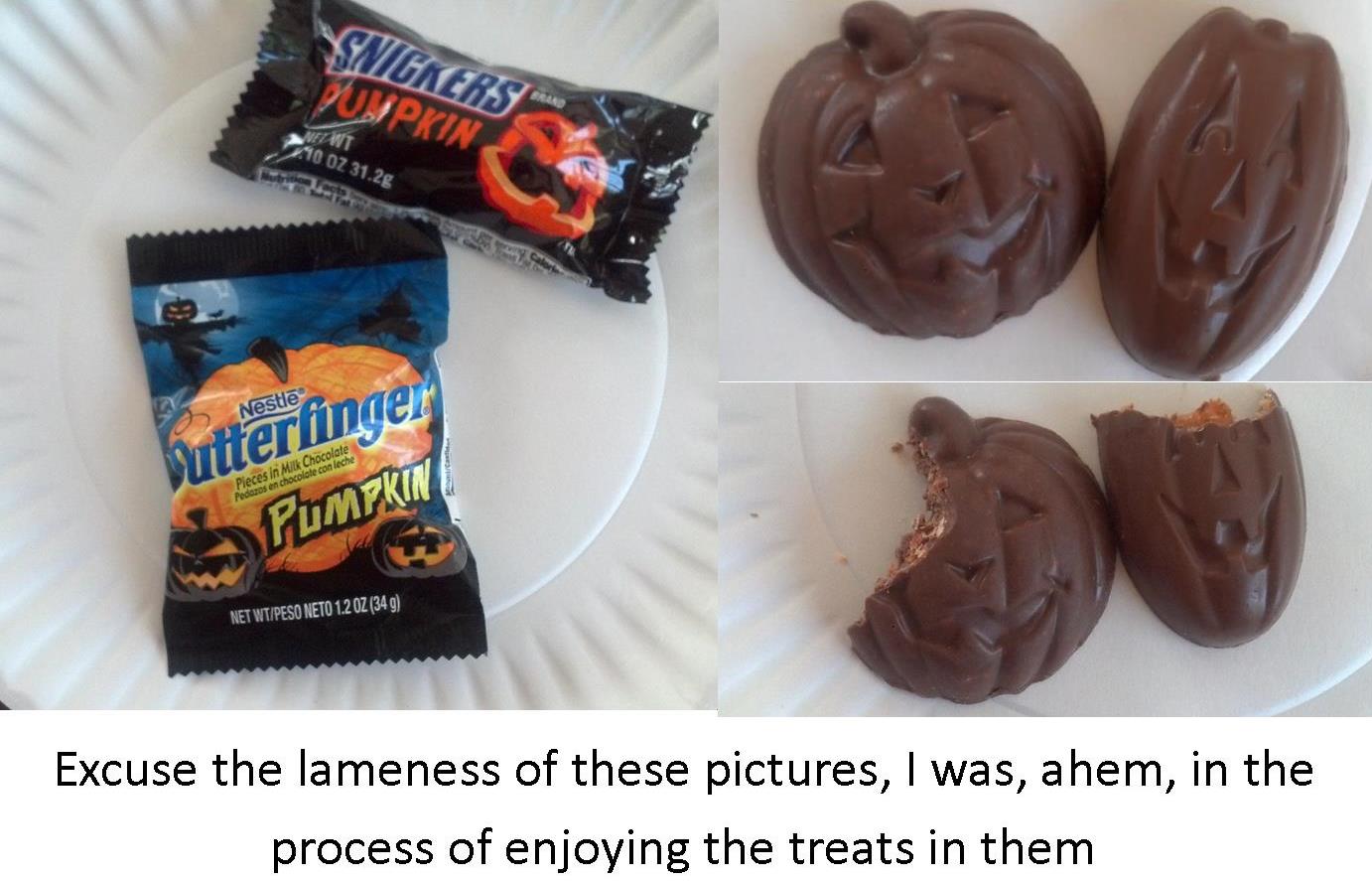
All that said, I admit I bought the fun candy, and yeah, I ate it. Halloween is over 10 weeks away—and I don’t care.
The truth is, Halloween is my favorite holiday. I love the dress up, the haunted houses, the watching of old timey (not so) scary movies, the candy—that last one alone is my favorite; if a holiday in which kids knock on doors and ask for hand-outs of sweets did not exist, it would have to be invented. My birthday is just a couple of days before it. Fall has always been MY TIME. October has always been MY TIME. I just celebrate all of it for a whole week on a sugar high. So I don’t really have a problem buying (and eating) Halloween candy in the beginning of August. Are all the merchants “pushing it” too early? Yep. Good—prolong the season, I say. I’m restraining myself from putting “Night of the Living Dead” in the DVD player and searching online for decorations and Halloween themed recipes as I write this.
If you read my About page, you can guess that all my love for fall evaporated in 2010, as I was diagnosed a few days before my birthday. One of the many oh-so-awful things about cancer is that treatment takes sooooo long, so the hurdles, like day of surgery, first day of radiation, or first day of a type of chemo round, are bound to coincide with some otherwise pleasant milestone day, be it birthday, anniversary, etc. I guess in some ways it is good that my absolute worst day in cancer, the day of my surgery, happened in late April. I’m not a fan of springtime; I’m allergic to all kinds of pollen and usually Benadryl-ed out of my mind. So, the memory of surgery is not tied up with an otherwise pleasant memory. I like the other seasons much more. Fall is my favorite, October is my favorite, and it just sucks I had to go through the testing and diagnosis in October. Just no other way to describe it other than that: SUCKS!
And of course on top of it all—say it altogether now—National Breast Cancer Awareness Month. When I first started haunting the internet on this issue last October, looking for the like-minded in my dislike of the pink ribbon circus, I remember distinctly reading one article, or blog, in which a woman talked about how much she used to love October and fall, and how that was ruined for her by the oversaturation of pink awareness. I wish I could remember where I saw that piece—it was the first one that made me start to feel better, because I knew then I really was not alone; not only was someone else sick of the pink ribbon, someone else didn’t like the way the intensified pink madness appropriated such a wonderful time of year, pouring perky pink over my beloved golds, yellows, oranges, and browns.
I am naïve, probably, in thinking I can “take back” October, as I claim here to be my intention. The onslaught of PINK will be too much, and something is bound to make me nuts, make me open my big mouth. I consider stocking up a number of dry goods so I don’t have to buy products emblazoned with that effen ribbon that are going to pop up on shelves any day now. Good thing I have a big Hurricane Preparedness/Evacuation Kit ready, stocked with the types of items that will soon be pink-er-ized. I can just use those if I start to run out (and there is no Sandy-type of threat). I gird my loins for the barrage of Pink events, for the endless, insultingly named ta-ta/second base/boobies-saving (not life) fundraisers.
Yeah, I know, it’s too early to borrow trouble. But, I repeat, the Halloween candy has arrived in the stores. Prepare.

I will do my best to ignore what sends me over the moon, to calmly correct untruths or half-truths I see/hear (1 in 8, early detection = prevention, need I go on?), and most of all, enjoy MY month, MY holiday, MY way. I will carve pumpkins. I will decorate anywhere I can. I will buy and eat and give away candy. I will make Halloween themed beverages. I will jump into piles of leaves like Linus, but avoid his error with the lollipop. I will cheer the Ravens when the games are on. I will enjoy the cozy sweaters some days and run in the ocean in my cut-offs on others (if you don’t like the weather, wait 5 minutes…), probably chasing some water dog.
I cannot forget I had cancer, I can control so very little in my life, but I can do this.

In the Moment

Posting this one again
I am re-posting something I wrote in January. While each age group has specific challenges in cancer, putting patients into boxes based solely on age can be problematic. As someone diagnosed under 40, yet branded a survivor once over 40, yet unmarried and childless, I just seem to fall through a lot of cracks. I feel like I have little to nothing in common with people in my alleged age group these days, and certainly little to nothing with those younger and older. Feeling lonely about that today. I guess I have felt that way for a while. I’m tired of not only the health industry making these boxes based on age, but groups designed to help patients doing it too.
The Age Divisions
Posted on January 8, 2013 by Cancer Curmudgeon
When I was first diagnosed a few days before my 39th birthday, I concentrated on just the big picture of breast cancer, and I did not really pay attention to issues of age…at first. I was lucky to be treated at a facility that, despite its location in a small-town and rural area, was evolved enough to have a resource for young adults with cancer. A special support group was started for us by my friend, diagnosed a few years earlier with ovarian and uterine cancer. Joining support groups is so the opposite of my personality, but I am so glad I joined this one. It helped offset the annoyance I still felt going into the infusion room and seeing the looks of surprise given by my fellow patients as they watched me, not my mother, sit in that chair each time (even though I was the bald one, go figure).
As I progressed through treatment and began interacting with the others in our support group, I have researched a few resources outside of our little local circle for “young adults with cancer”. There are some cool things out there, like Huffington Post’s Generation Why blog, Stupid Cancer/I’m Too Young For This! Foundation, and First Descent.
But I wouldn’t be the Cancer Curmudgeon if I did not have a complaint. Generation Why is a play on “generation y”; naturally I am “generation x”. First Descent and events produced by Stupid Cancer are for anyone with cancer ages 13-39. Since I was going through treatment the entire time I was 39, and I worked while in treatment, I did not have much left-over energy or vacation time for anything like that. Hell, even the SCAR Project, which I admire greatly, had a limit of age 35 for participants. So does that mean, since I am 41, I am no longer allowed to be a sexual being, upset at the scar and lack of nipple that cancer left me? I do not think this, but it seems that “society”, or certain organizations, or who knows else, is putting these parameters in place, once again trying to fit cancer experiences into these little boxes.
Cancer sucks no matter what number of years you’ve walked this earth. Maybe people should not be reduced to age brackets when it comes to cancer. At 41 I should be at a certain place in a career, married with 2 kids? Nope, I don’t fit the “profile”. No kids…so the worries of informing my kids, raising kids, and worrying about their future without me does not apply. But I am single and would like to find a husband, and hell yeah, I am worried that my “damaged goods” are going to impact my chances of finding a one, a problem I see discussed in articles targeted to those in their 20s and 30s. In addition, I am certainly nowhere near retirement, in fact, am still searching for my “perfect” job. In short, I know what my particular challenges are, and there may be someone out there in the same or a similar boat, or maybe not. I’m sure lots of patients cannot imagine facing my set of circumstances, the same way I am baffled when I read other bloggers’ posts of trying to go through college while in chemo, some without family support.
Look, I am not poo-pooing these resources I’ve mentioned, I am grateful they exist. I sort it out as I research & read, and just try to take what applies to me and move on. I know that the medical community and these various organizations have to create these age brackets in order to do the testing, compile data, and create their target markets. I especially would like the medical testing industry to expand their vision to include testing and results for each and every age bracket, so treatment can be improved and prevention discovered. It’s all about the stats and the odds, I know.
I just want everyone, especially the number-crunchers, to remember that the one common thread in cancer patients no matter the age is that we all want to survive and live well, and that there is a person behind each number or stat.
On Loving a Sick Body
To Tell The Truth
I Can Pretend
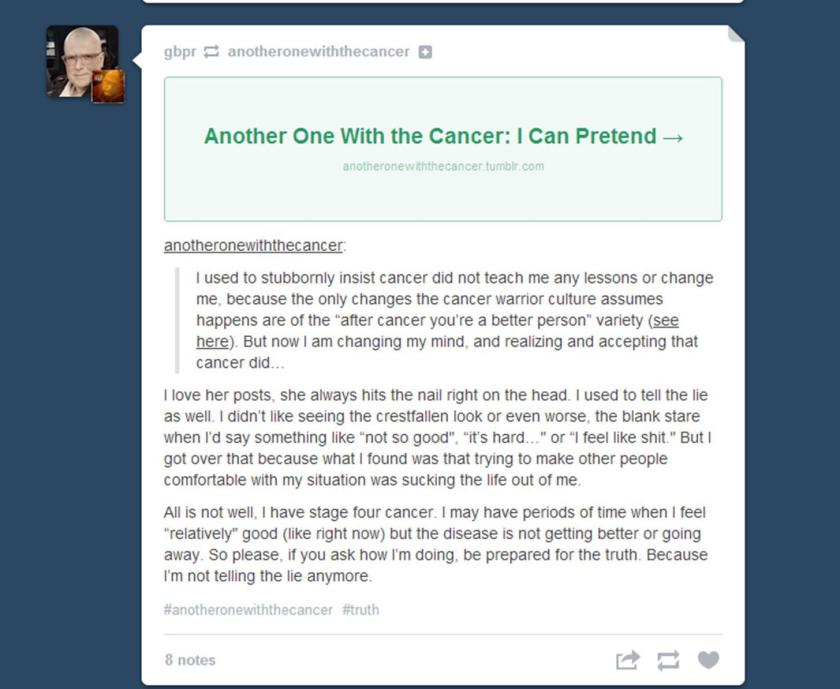
I used to stubbornly insist cancer did not teach me any lessons or change me, because the only changes the cancer warrior culture assumes happens are of the “after cancer you’re a better person” variety (see here). But now I am changing my mind, and realizing and accepting that cancer did change me, teach me lessons…and they are NOT the happy sappy lessons that society wants learned. No, cancer is teaching me that it is preferable to lie.
Much ink is dedicated to the Dumbass Things People Say to Cancer Patients. Now I’m considering the opposite: Dumbass Things People Want Cancer Patients to Say. I’ve seen a couple of pieces lately that talk about how cancer patients are asked “how’s your cancer?” or some such nonsense, and how lame it is to try to answer, because the person asking only wants to hear that everything is OK. As discussed before, some folks are all in during the first few weeks of diagnosis, then tend to fall away as treatment drags on, like treatment always does. The expectation is the patient should be all done, right away, and people are tired of hearing about the boring cancer. So I see bloggers and hear others admit they just lie, and say they are “OK”, when nothing could be further from the truth.
I experienced this my own stupid self a couple of weeks ago. Typically, if it is someone I only slightly know who is doing the asking, I tend to just say “I’m fine,” or “no tumor today!” The person who asked me recently was someone a bit closer, so I felt more comfortable giving the long form answer. Unfortunately, I happened to be going through the impending check-up dance—you know, blood tests, mammogram, see the ol’ oncologist—all that jazz. So in short, I was nervous, having no idea what kind of news I was about to receive. Perhaps I should’ve just said, “I’ll get back to you next week.”
But no, I rambled on about how this, that, and the other is still a worry and about things like the thrill of being able to stay up to see the late night talk shows without having to take a nap during the primetime shows, how great it feels to not make a choice between the two. Stupid little victories over side effects.
When I finished my ramble about the joys of staying up late without napping, the person who asked about my cancer said, “oh, you’re not as tired as you were during treatment, that’s good, that’s all I wanted to know—you’re better.”
The job I held when diagnosed with cancer required much interaction with the public, in a small town, at large public events, and I did a good bit of standing up and speaking in front of small audiences. My absences and changing appearance (my wigs sucked and I never wore them) were noticed, so I was upfront about my cancer diagnosis right away. It was just easier than dodging it or beating around the bush, or so I thought at the time. I hold a different view now. I wish I had not told anyone really. Oh people would’ve found out; that is just small town grapevine stuff. But folks would’ve been less likely to bring it up to my face. Because now I’d rather not be asked about it by people I don’t remember well when I run into them at the store or wherever.
When people now ask me about my cancer, my true, big-mouth nature just wants to lay it all out there—the constant fear cancer will come back, my paranoia that every strange bump or slow healing scratch screams “cancer”. I worry that the changes in my body that are in reality PROBABLY just the signs of aging and being 41 years old, might be lingering side effects.
But no, more and more these days I feel the necessity of participating in this small aspect of the societal expectation of the warrior/survivor/cancer-ass-kicking myth (I tend to thank the doctors and drugs for my survival; I’m not a warrior). It is just easier to lie and say “I’m fine.” No one wants to hear my whining, my fear, MY REALITY that cancer is always around the corner for me. Because if that is the truth for me, it could be the truth for anyone, and no one wants to think about that.
I think back to the conversation I had with the person mentioned above. The morbid, exasperated side of me wonders if I show up in a month with a recurrence, how will that play out? Will the person who asked me say, when chatting with others, “I saw her not long ago and she was fine, getting back to normal.” Will she sigh, shake her head, and make some comment about the unpredictability of cancer, how it strikes when all seems well, when recovery is within grasp?
That’s just it isn’t it? Some cancer patients know how cancer came out of the blue. And we never think it’s “all fine”, we’re always worried it will come back, no matter how great everything seems to be going. It doesn’t matter how many lies I tell, including the big “I’m fine” lie, I know what can happen, I’m aware of it every single second.
Related:
Take the Mythical Image of the Strong Warrior Breast Cancer Survivor And Bury HER Once & For All
I’m Allowed
A very special thanks to Tumblr buddy lux-fiam, who guided me as I struggled with this post, and to my IRL spoonie/fake psychiatrist/professor friend, with whom I fight The Overwhelming.
For the people who say “thanks for this.”
This post is about allowing myself and encouraging others to do cancer any way we damn well please.
Just prior to starting this blog, and in the hazy days of bouncing back from the treatment side effects, I was in a bit of a depression. As I’ve mentioned in previous posts, I had no time or energy to find blogs while I was actively in treatment and working my ass off. During treatment I was not happy with the rah-rah/pink/warrior culture that was the most prevalent form of support available (except in the diagnosed-under-40 support group, thank goodness). After I made some life changes, I was pleased to finally be able to take some time and dig around and find blogs or articles that said some of the thoughts that were more like mine, and I began blogging to interact a bit.
Around the same time I found other blogs, I had an epiphany. I was at some event last autumn with other cancer patients and expressing some anger. A fellow attendee started suggesting stress reduction methods, telling me that I must “accept” my cancer and ended her pseudo-lecture with “you can’t be angry all the time.” I was just so sick of this type of lecture; it wasn’t the first time I’d heard words of that nature. And BTW, I don’t think people mean the dictionary definition of “accept” when they tell me to do that; I think they really mean “shut up and sit down”.
There I was, a 40-year-old woman, being talked down to like a 6-year-old, because, being, ahem, a couple decades younger than most in the room, I was the youngster, the newbie; never mind I’d finished treatment already. I was not a cancer expert (and still am not), but I wasn’t a novice either, for crying out loud.
Then it hit me—why was I even listening? I can be angry if I want! I probably thought those sentences in the petulant voice of the 6-year-old me, but the minute I did, half the anger just fell away. And it continues to fall away still. By giving myself permission to be angry, sad, frustrated, etc., I become less so, especially with each post I write. Sure, anger & other bad company are still there, but in a weakened and more useful way–they inspire and motivate me, to speak up or write these posts. Whether they should be posted and sent into the blogosphere—I’ll get to that in a minute.
While I get that people who say “think positive/cheer up” and that sort of thing are well-intentioned, maybe even trying to help—the result for me is the opposite. I just get more pissed off, because in my mind, my feelings are being diminished, dismissed, blown off. That never feels good. Cancer sucks, but being told how to do cancer sucks too. Part of the crapfest that is cancer is the culture around it (especially true in breast cancer), and the culture demands conformity, and as I’ve said in previous posts, I cannot do conformity. It is great that the normal, socially acceptable warrior/pink/rah-rah methods work for the majority of folks, I can respect that. I’ve seen people swallow negativity and wondered if they could achieve better peace by letting it out, but it is not my place to tell them what to do. And I don’t want to be told what to do/how to handle cancer either.
This blog is to escape and to challenge all of the bullshit in the warrior cancer/don’t worry, be happy world that just does not ring true for me. Here, I express my thoughts in my way, no matter if they are angry, or blunt, or whatever other unpleasant adjectives can be applied to them. Here, I express my experiences of cancer without (much) self-censorship. My professional life before 2012 was very constricting, so I wanted a space where the rules, limits, deadlines, ideas were mine alone. This is that space.
I think many would tell me I should keep my ugly thoughts to myself; I should stop sending negativity out into the universe, or blogosphere. But my challenge to that attitude is this: why is expressing negative feelings automatically considered a negative action—why can it not be viewed as a positive, “working through it” technique, which is kind of the point of a lot of therapy? How can bad feelings be turned around if not confronted, if they are constantly submerged, denied, hidden politely away? And most of all, why is it assumed that expressing negativity means the one expressing it is negative on the whole, and somehow not capable of experiencing other emotions (sometimes simultaneously)?
My blogs are not read by many, but the few comments I’ve gotten here or on the other blog tend to say “thanks”, and some variation of “I thought I was the only one who felt that/this is what I’ve been trying to say.” So while many hear/read thoughts that make them uncomfortable (which might be behind some of the “get happy” suggestions rather than a desire to really help), those same thoughts provide comfort to a few. I remember all too well last October not knowing what search terms to use to find people with opinions similar to mine, and I remember all too well how relieved I was to stumble, bass-ackwards, onto blogs that did express such opinions. So if my blog is just one more place someone can stumble upon and find relief, then my own victory over anger & company is nearly complete. I hope your victory can be found here too.
 anotheronewiththecancer