Changing the Meaning

“You see us as you want to see us: in the simplest terms, in the most convenient definitions.”
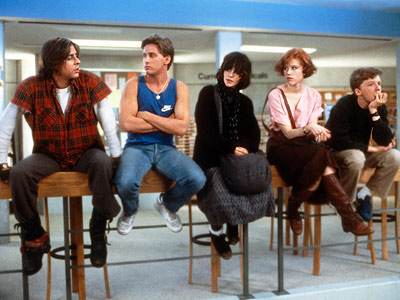
123046__breakfast_club_l

I will continue posting the story of my decision to not get nipple reconstruction, but to instead get a funky tattoo, a source of much joy for me, in the next few days. I had to interrupt posts on that story because of this other cool post I read.

There was recently a great post at Regrounding about the word victim and its use in Cancerland and a few other communities. I’ve always had much trouble with some language in Cancerland—the words warrior, survivor, hope, awareness, fight, acceptance, healing—all have made me at least uncomfortable, sometimes downright angry. I had not given much thought to the word victim, although I rarely if ever used it to refer to myself, until I read Lori’s post and the comments that went with it. The tweeters in the post’s anecdote, and many of those who commented, outright rejected the word victim, although the meaning of the word fits. Part of me wants to say, yeah, I am a victim, because cancer happened to me through no fault of my own, just like a hurricane or some other natural disaster. As the post pointed out, we have no problem saying, “I am a victim of the most recent hurricane.” But you know, we could place blame on those folks too, couldn’t we? Who told those “victims” to live near the ocean, or near the fault line, or in a tornado-magnet trailer park? Who told you to get fat and not have children so you would get cancer? See my point?

So I am kind of afraid to identify as a victim of cancer. While I do not view myself as weak, I will be perceived that way; judging from that post. One person cannot change the meaning of a word or symbol in society just by proclaiming the word/symbol to have another meaning. Let me explain in an anecdotal example.

Once upon a time, before I got cancer, I got involved in an on air radio discussion. Topic of the day: some folks flying the Confederate flag at a local 4th of July parade (and we are just barely in The South, we never seceded, but yes this area was slaveholding, and our butts were immediately whipped at the start of the war). This rock station’s DJs were a bit conservative, touting individual freedom in order to support the people who displayed the flag. The common agreement was the flag represents state’s rights, and no one should be criticized for displaying it. I called in to discuss this issue, pointing out that 1) everyone has the right to free expression and 2) even the swastika’s origin is Hindu, and once had positive meaning, like being good or your higher self, but it doesn’t mean that now! The DJs misconstrued my comments as supportive. Actually I do support freedom of expression; everyone has the right to make an ass of themselves! (I do it every day.)

Image

But my larger point is this. If I wore clothes with swastikas all over it —even with the little extra dots around it like the Hindu version—I would be perceived as a Nazi, a racist. I could say until I was blue in the face, “no, it’s Hindu for good, being my higher self,” and I probably would just get a lot of funny looks. Bottom line, in today’s society, the swastika means racism and Nazism, Hitler bastardized it, and it will take hundreds of years to change that. The stars and bars mean Confederacy, the losing side of the Civil War, and racism. Even the phrase “state’s rights” was used to really mean the right to own slaves. If you display the rebel flag, especially with the words heritage or pride, you may think you are just showing off your redneck status—or a really misguided devotion to “The Dukes of Hazzard” television show—but you are pretty much going to be perceived as a racist. Yammer on all you want that you are not a racist, that you are just showing pride and heritage, not many will listen or believe you. Sorry folks, that is just how it is, deal with it. (Here is a great opportunity to prove me wrong readers…please!)

These symbols, and words that become symbolic, are societal shorthand to judge each other, to put others into little stereotypical boxes in our minds. See a guy or girl with long hair, sandals, and tie dye t-shirt? Hippie, follower of the Grateful Dead, probably too stoned to be a productive member of society. See a dude with a pocket protector, glasses? Geek, nerd, can probably fix my computer. Hear a breast cancer patient identify as victim? She is weak and helpless. See a bald woman decked out in pink with the ribbon all over? She is a warrior, and she is gonna beat this thing, personally. All of this is just absurd, and not always true.

I do not know how to change how society perceives these symbols. I do know that just me alone, standing here in my corner of the internet saying “I am a victim of cancer, and that is not negative and I am not helpless and weak,” will not change the symbolic language. I could go on all day, picking apart why I dislike all those other words (warrior, hope, survivor), not sure it would get me anywhere. I guess the key is that all of us, not just here in Cancerland should stop judging others.

But the sad question is, can we? Last night for the millionth time, I watched The Breakfast Club (the remote was all the way across the room and I was too lazy to get it), a great film making me nostalgic for my pre-teen and teen years. Ultimately, I am glad for this laziness inspired turn of events. I forgot how brutal the kids are to each other in the beginning. Their judgments and assumptions of each other based on how each kid self-identified by style of dress & choice of friends, was cruel and astounding.  Worst part? Nothing has changed, we are all still living on high school terms! The film is nearly 30 years old, and this quote from it still rings true:

“You see us as you want to see us: in the simplest terms, in the most convenient definitions.”

My challenge to society, especially breast cancer society is this: can we change, stop making assumptions about others based on how we self-identify, etc? For example, online, my blog, can tend to be negative. I can be a positive person in real (not cancer related) life, I do tend to be Pollyanna, always looking on the bright side, I just tend to use my blog & cancer support group as a place to vent. There is a reason for that, but that is a whole other post. Wanna know another secret about me? I may call myself a cancer victim, but I do not have the victim mentality, it has nothing to do with who or how I was before cancer. I came from a poor, uneducated family background. I was the first grandchild on my mother’s side to go to college, and I paid for it MYSELF and I am very proud of that. It would have been easy for me to live out the expected stereotype for my background: redneck, pregnant before 20, etc. and blaming my parents or family for how my life turned out (which is what we think those with a victim mentality do, don’t we?). But I changed my situation because I could. Hell, the fact I look at that as a bad situation shows I am a stereotypin’ jackass my own self!

I cannot change that cancer happened to me.

Now what?

I am a Cancer Victim

Wow, great post, great discussion. I love anything that causes thought provoking discussion.

I am fascinated by the knee-jerk rejection of the word victim. Based on the definition in the beginning of this post, being a victim is nothing to be ashamed of, really. It is not like I actively “asked for it”; I did not sit around, cigarette dangling out of my mouth, beer in one hand, fatty chicken leg in the other going “come and get me cancer!” I did not cause my cancer. And I think there is something to be explored when you say “I wonder if our visceral anger when hearing ‘cancer victim’ isn’t about our not having completely, deeply shaken the notion of blaming the cancer victim.” The message that one can prevent cancer by eating right, exercising, abstaining from smoke an alcohol is ubiquitous and the way I interpret it, I am being blamed for getting cancer. I see many comments about empowering oneself and choosing to do all these right things, and I wonder if that is about helping the patient feel back in control. I pose this question: if we desire to empower ourselves and exert control by doing all these right things, and reject the notion of victimhood, then if cancer returns, are we willing to accept blame?

The word victim seems to be another troubling—for me—piece of the confusing language of cancer. I do not generally call myself a victim, but after this post I might. If I remember correctly, rejection of the word started when breast cancer activism began borrowing from AIDS activism, as patients began to identify as activists, and then blew up when the Komen/Livestrong warrior language (wish I could remember the places I read this, so I could site it). I have so much trepidation regarding these words: awareness, survivor, victim, warrior, acceptance, battle, fight, hope. I am coming to terms with identifying as survivor but I may never be comfortable with the warrior talk. I did not battle cancer; I made logical, informed decisions to go to a doctor, learn my options, and engage in treatment. It wasn’t as dramatic as gearing up for a firefight in Iraq or something, but I do not consider myself passive either; that would’ve been choosing to not get treated and let cancer kill me. To me hope is the most passive word in the bunch, but that is the one slathered all over breast cancer awareness ads, and usually embraced in the community. I don’t like it. Sounds like we are just supposed to wait like good little patients, and hope someone finds a cure. Bleh, no thanks.

It is odd to me that there is discussion about victim mentality; if anything, the example you presented seems to indicate the opposite. Sounds like specifically in this instance there was almost peer pressure to reject victimhood and so forth. I do not think it is a symptom of victimhood mentality, or a failure to move forward by recognizing that cancer had a major impact on my life. Obviously it did, or I would not be blogging about it, or reading other blogs and commenting on them.

Lori's avatarregrounding

vic·tim  [vik-tim] noun

1. a person who suffers from a destructive or injurious action or agency: a victim of an automobile accident.

2. a person who is deceived or cheated, as by his or her own emotions or ignorance, by the dishonesty of others, or by some impersonal agency: a victim of misplaced confidence; the victim of a swindler; a victim of an optical illusion.

(from dictionary.com)

This one is going to rankle some feathers, and I look forward to a brisk dialogue in the comments section!

View original post 579 more words

Former Grunge Girl Attempts to Redefine the Idea of Beautiful Breasts Part 1

As I’ve said before (see Why I Did Not Do Reconstruction), for a number of reasons, I opted to not go with reconstruction. Things like lack of money and fear of surgery factor heavily, as does an overwhelming sense of “it just does not seem right for me”. It’s not like reconstruction would erase all that has happened to me and my body, the scar would still be there, and the created nipple would be there only to make me appear normal to others (men). It will never again be a source of stimulation that women unharmed by breast cancer still have. Why should I try to make it look like it did before? It isn’t, and no amount of cosmetic surgery will make it so.

In some ways, I think I just rebelled against all those save the ta-tas ads, which I believe to be misleading. I hate the boobies/ta-tas culture associated with breast cancer, because ultimately it cheapens and makes light of breast cancer. Judging by some of the reactions to objections about the campaigns—“but breasts are beautiful and they sell/bring awareness”—it almost seems as if people don’t get it: if one gets breast cancer, detected by the ad-recommend mammogram, there is a strong possibility that the afflicted breasts will wind up wrecked. For all the talk of awareness, I think most people who have not actually had breast cancer just don’t understand this—they are UNaware.

Reconstruction, to my punk rock/grunge girl-from-the-90s sensibilities, just seems fake. The culture of the punk/alternative (they aren’t the same but I can be both) rebels against all that fakeness. As a huge fan of this music I embraced this rebellion against all things fake. In addition, being a strong woman back then did not mean dressing like Beyonce; jeans and flannel were OK (dressing like Beyonce and proclaiming female strength is a whole other post, ugh). Sometimes I miss a few aspects of the political correctness and Riot Grrls that were a part of the early 90s. Just sayin’.

I still have these sensibilities, and they probably inform my current opinions about breast cancer culture and my own experience more than I even know. I recognize it enough, however, to know that it is why I reject the reconstruction notion. All this rambling here really boils down to: it just isn’t right for me.

I wanted to do what a few women are now opting to do, to be real and/or express themselves artfully after surgery. By now everyone interested in breast cancer issues has no doubt seen the video or photos of Jill Brzezinski-Conley, and know of the recent fuss on Facebook involving the photo of Inga Duncan Thornell, who tattooed over her mastectomy scars, photos of which are in the book Bodies of Subversion: A Secret History of Women and Tattoo. I did not find much of this stuff while I was in active treatment (despite Bodies of Subversion apparently being written in 2001 or so), and considering reconstruction. In fact it was really difficult to find pictures of women with lumpectomies or mastectomies that mirrored what my body looked like. Everything only showed nearly finished or finished reconstruction. I did not like what I saw. It was not until late in the game I found the SCAR Project and blogging. I found a few bloggers posted pictures of their breast(s) saying they too found it difficult to find pictures. But even with the discoveries of these blogs, there are still NOT lots of pics of what I look like. And still, most pictures I find are women going through the reconstruction process, trying to return to “normal”.

I am still debating, as I write this, whether I will join the ranks of those who post their pictures. Probably will. But I will explain what I’ve done and why, in future posts.

Can I Do Anything?

Great, I have insomnia tonight so I see a post about why sleep deprivation is bad for you. A few clicks into the slideshow and there it is….lack of sleep causes cancer.

Well of course it does. Because there is not a scientist or medical researcher alive that cannot somehow link anything a person does to cancer. And yes, it has to be something the person with cancer did, because we all know those of us with cancer brought it on ourselves. I know I keep harping on the blame the victim issue. I’ll stop when “they” (researchers, scientists, doctors, journalists) stop blaming the patients.

Best part was the note in the blurb saying lack of sleep is linked to recurrence of breast cancer. So I am up at nights sometimes worrying about cancer coming back…and that causes cancer to come back. Or the other half of the time, I’m out like a light, because I still get very tired, very suddenly thanks to all that treatment.

Anyway.

I have to go back to breathing now. Whoops, better not do that, it causes cancer.

Grumpy Cat Does Cancer

Grumpy Cat Does Cancer

Finally, my favorite meme quotes my thoughts exactly!

Wrong

Let me start by saying bullying is horrible.

But I am questioning today how it is being confronted.

Watching another stupid morning show and for the second time this week I hear about some non-profit that pays for plastic surgery for kids who are bullied for some aspect of their physical appearance. Right now I am seeing a girl with larger-than-normal ears, and earlier this week I saw a segment about a girl with a larger-than-normal nose. The news reporters do a before and after, interviewing and showing close-ups the girls in both stages.

Can we list all the things wrong with this phenomenon?

  • Granted, I am writing in knee-jerk mode right now and have not researched this issue, but BOTH segments feature GIRLS who feel the need to change their appearance. I need not say more, do I?
  • How many times must I repeat the phrase “blaming the victim”? By getting surgery to rid the problematic physical feature, the bullied is getting modified, when it is the perpetrators that need serious behavior modification to make them less reprehensible human beings.
  • What about those bullied for aspects of themselves that cannot be changed….uh can anyone say sexual orientation? The message I hear is if you are bullied, change what it is about you that is the source of the bullying, and if it cannot be changed, you are shit outta luck.
  • This last one is harsh and cruel, but it needs to be said: a non-profit to pay for kids who cannot pay for plastic surgery, REALLY? Tons of people struggle with medical bills for life-threatening illness on a daily, boring—as in not featured in a news story on TV—basis, and no one cares, no one gives money. I remember being so angry and guilty for that anger this summer upon hearing about how hospitals were treating financially challenged victims of the midnight movie shooting spree free of charge. So, if you are poor and you are lucky enough to get harmed in a life threatening way that is newsworthy, you don’t have to worry about medical costs? But if you are an everyday American, say with cancer, struggling in an unfair medical system, too bad, so sad? If I get cancer again, it will be catastrophic for me financially. If I die, I will just be another casualty of our fucked up health care system, and there will be no non-profit, no news story.

Maybe that should be a news story. Here’s my number Anderson Cooper, call me maybe.


Aggressive breast cancer in more young women, study finds

And in this article about it, once again putting off pregnancy is blamed. Great. I never wanted children and wisely chose not have them, and I got cancer for my troubles. Really? Blaming the victim again? Make it stop, please!

Image

Another One With Cancer…Gone

tumblr_mird05EAda1rur33uo1_1280

Congratulations Academy for being smart enough to include Adam MCA Yauch in the In Memoriam section. He wasn’t just some rapper. He was a film director and founded a great independent film distribution company, Oscilloscope. Another champion of indie film gone.

A Necessary Repeat

I wrote this several weeks ago for my other blog on Tumblr, which skews a bit younger. It covers a topic I’ve covered here on this blog, but it seems to need repeating. I was angry after seeing one too many pictures of a certain food with the caption “prevents cancer” and suggestions of try this (magic spice/herb). So, excuse the ranting nature of it and all expletives.

Stop Looking for the Magic Bullet

I’ve seen a few posts lately touting vegan diets or a certain food or drink, with the words “prevents cancer”. I know everyone wants “hope”, and wants to do something proactive to prevent this disaster from happening (again). Here comes the cancer curmudgeon to put a pin in the hope balloon, to piss on the hope parade.

The appropriate phrase is “lowers risk of developing cancer”. If some food or drink actually “prevented” cancer, we’d all be ingesting it, because only a moron would want to have cancer—and I mean that, if you’ve ever said, “I wish I had cancer to meet (random celebrity), to be thinner”, you’re a moron.

Magazines, internet articles, etc. flash the words “prevents cancer” to take advantage of our desperation to do nearly anything to not go through it (again), and people buy their product, go to their site. I’ve nearly gone crazy in the past two years seeing those words thrown around on countless magazines as I wait in the check-out line at the grocery store. If anyone actually knew the numerous causes of cancer, there would be cures (there can be no one cure, the disease is far too complex, even in breast cancer alone, never mind all of the cancers). I know of too many stories where the runner, the vegan, or the nutrition freak, got cancer. Hey I’ve eaten a shitload of oatmeal, still got cancer. I don’t smoke, still got cancer. I could go on all day. One of the people who guided me as I went through treatment was the healthiest guy I know: runner, strict nutritional diet, hell, my friend, his wife, is a nutritionist! Guess what—he got lymphoma AND non-Hodgkin’s lymphoma at the same time. There are too many anecdotes like this. Sometimes bad things like cancer happen to people who are most unlikely to get it. If cancer had a motto, it would be “shit happens.”

This brings me to my larger point—phrases like “prevents cancer” feeds right into that “blame the cancer patient” line of thinking. Too many times those without cancer ask dumbass questions like “did you smoke”, “did you exercise regularly”, or “were you overweight”. The biggest risks for getting breast cancer are being a woman and aging—well, I don’t wanna be a boy and when anyone finds the antidote to aging, please tell me. One preventative method suggested on breast cancer websites is giving birth and breast feeding. I never had kids because I’d be a terrible mother. (And the having kids thing would not apply to me anyway, because I was EP negative, my cancer had nothing to do with estrogen, see what I mean about it being a complex disease?) So I deserve to get breast cancer, to possibly die because I made the RIGHT decision for me? Fuck no. Do smokers or former smokers deserve lung cancer, to die? If you think “yes”, then you are an asshole.

I’ve fallen victim to this line of thinking too, yep, I’m a giant hypocrite and I admit it. I cut up tomatoes real fine in the salads I eat constantly now, even though I prefer lightly cooked veggies, and I hate tomatoes, but I eat this because of the alleged cancer fighting properties. I only buy make-up and beauty products with lower amounts of carcinogens and rarely use nail polish, which I really miss. For the first time in at least 20 years, my hair is its natural color, because of the carcinogens in artificial hair color. Hey, here’s a wacky idea: how about corporations stop putting this shit in products? How about NOT putting cancer causing chemicals into animals we eat, and making the meat affordable to all?

There is nothing wrong with taking actions like eating better to improve health, yes, even to lower risk of cancer. I respect those who’ve made the commitment to do so. I respect those who only post positive things in relation to cancer, who embrace the pink and/or Komen culture. It just is not my way of looking at the world, and I hope that this does not tarnish how you read this rant. I’ve said it before and I repeat: I am grateful for all the drugs and care (some the direct result of pink dollars) that have made me NED (no evidence of disease). But being grateful does not mean I should stop asking for more, for better, in the search for treatment and prevention of ALL cancer. I hope I never lose the will to ask this.

In the fight against cancer (if we must use this terminology, oh how I hate this language of cancer, like those “who lose the battle to cancer” just were bad fighters, or losers), science needs to develop better weapons, corporations need to stop poisoning products for profit. Those are the bigger, more effective ways to fight cancer, instead of putting the onus on the individual. Don’t hand me a damn peashooter, I want a fucking nuclear missile.