Update on earlier post

In the comments on my post Somebody Needs to Buy These Media People a Dictionary, it was suggested I contact Good Morning America or ABC about the difference between prevention and early detection. I did, that Friday, and have heard nothing.

Granted, I am a “nobody” to them, with no special knowledge of the story. And they’ve drawn a little fire for their coverage of the Ohio rape verdict, although not as much as CNN, so they might have their hands full right now.

But they could not be more wrong. I am not a nobody with no special knowledge of that story.  I am a viewer/consumer, maybe just one consumer, but I obviously have no problems pointing out their failure, and I hope others out there in tumorville who agree with me have no problem spreading the word when the media so blatantly gets it wrong. And no, I don’t have “special” knowledge of cancer, or of words like prevention and early detection. I do have common sense & the ability to read.

Attention all media outlets: stop insulting your audience. I’m holding you accountable.

Attention to those of you who agree with me, send complaints to media stories you know to be wrong, complain on you blog, do what you can. To paraphrase the Beastie Boys, “make some noise if you’re with me”

Cancer as PMS

I used to say this about PMS: things that I griped about when I had PMS bothered me all the time, it is just that when I had PMS, I was more likely to tell you about it.

I’ve found the same to be true of my post-cancer lack of patience, really. As in, I have none at all. So, it may appear more things irk me these days that did not irk me before I got sick. Nope! All this stuff always pissed me off…I’m just faster to start complaining about it, and I do it louder than ever, in a completely obnoxious manner (I used to be more polite).

And I am soooo OK with that!

I’m making this fact part of my new normal (man, I’m starting to hate that little Cancerville phrase too–but that’s a whole other post).

Somebody Needs to Buy These Media People a Dictionary

So I’m watching GMA Friday morning and there is a brief segment about this co-host on Dancing With the Stars, Brooke Burke-Charvet. Now, I do not watch the Dancing show, know nothing of this woman, and have not bothered to look into her story on the internet, not interested enough. My complaint is the way the dark-haired female reporter, and her producers at GMA, presented the info. This Burke-Charvet woman has or had thyroid cancer, and is doing some promo thing on some health magazine about how her cancer scare means she no longer worries about looking young, and she wants people to live healthy, exercise (the usual crap), and get check-ups with doctors. Now, I do not know if it was Burke-Charvet who actually said people need to engage in preventative practices by getting annual check-ups, I will give her the benefit of the doubt. But certainly the GMA reporter said that the idea behind the campaign is for people to prevent health issues, like cancer, by going to their doctor. Apparently this Burke-Charvet has always lived healthy and had no symptoms, and it was on a routine visit to her doctor her thyroid cancer was detected.

In what universe is early detection equal to prevention?! Going to the doctor and learning she had cancer did NOT prevent cancer. She already had the cancer, therefore, it was NOT prevented. It was detected early, and that is great, but it was not prevented no matter how the media spins it.

This is the kind of thing the media does that drives me crazy. Throw around words like “prevent” so people feel in control or empowered. How many times will I have to write this? Some things are out of our control, if cancer had a motto it would be “shit happens”. This idea we can control every single thing that happens to us, cancer included, is just extreme hubris.

It is important for the media to get this language of cancer right. By suggesting to viewers that “prevention” is within our grasp just by getting regular medical check-ups is damn near negligent. I repeat, if a regular doctor’s visit (as in a visit not instigated by symptoms), reveals the presence of cancer, that is EARLY DETECTION, not PREVENTION.

The media needs to pull their collective act together. I am especially annoyed this segment was on GMA, a show featuring a news anchor with well documented bouts of cancer. She and her cast mates should know this difference all too well. Shame on you, GMA.

I’ve Fallen, But I Got Up, Sort Of

A couple of days ago, I experienced a modern catastrophe. I dropped my smart phone in the toilet, effectively ruining it and causing the need for an over-night replacement (thank you, year ago me, for getting insurance which mostly covered the cost of this). A few hours after that, my laptop imploded or something….the hard drive went haywire, and since I only purchased the darn thing about 9 weeks ago, it is covered by the manufacturer….so sending it back to the makers…fix it bitches!! All that is well and good, but I was left without internet connectivity for 24 hours. It was scary.

Funny thing is when you deal with the customer service or help desk reps of the various companies that support your product’s issues/problems, they seem to think you live in a big house with a picket fence, a computer with internet access in every room.

Yeah, right. Hey, I am a house/pet sitter; I live my entire life out of bags–luggage and laptop bags. I do not have a land line, or more than one computer. I do not even have a tablet or ipad thingy. I need to live light, simply, without having too many things to track. I know folks with iphones, ipads, laptops, AND home computer(s). Too much for me to carry around…smart phone and 1 laptop are my limit! But this idea seems to confuse the customer service reps. One guy kept trying to send me an email to expedite my repair process, not understanding my access to email and a printers were quite limited at the moment.

I griped about this at this guy, only to hide my real fears. 24 hours without being able to connect was scary. I cannot even remember a few years ago, driving even 30 minutes away, not to mention further, without having a way to call someone if I had an accident, a problem, a disaster. I mean, I used to consider the hour or so I walked a dog sacrosanct, I would have never used a mobile phone during a walk…that was time to be one with nature, all that crap. Now, I worry that I may fall in a ditch, get hit by a car or something, so I carry my phone with me, I can call 911 if need be.

When did I get so paranoid, turn into such a scaredy cat? Why is this such a big deal, I mean, I endured cancer, loss of connectivity should not scare me, but it does. Why?

My theory is the dual threat, both kind of health related. For starters, modern life means being connected all the time. Think about Facebook and all those social network apps, so one can tell friends their likes, locations and everything else, at all times. I still kind of have a hard time with the fact Google+ and Facebook only want my real name, and sell their product to me with the concept of letting my friends know what I think about every page on the internet I visit. Seriously? I don’t want all my thoughts, likes, locations revealed every single moment (odd thoughts coming from a blogger, I know, I know).

But then I think about safety. If I were to get kidnapped or something, my phone can reveal my location…does this not make me safer…and make the plot of the upcoming film The Cell pointless? I think about, especially, those life alert commercials  Remember that old commercial ages ago, with the elderly person lying prone on the floor screaming “help, I’ve fallen and I can’t get up”? That commercial is still sort of around, in combination with one featuring an elderly lady saying “all senior citizens should have Life Alert”. I’m not sure if these ads are for the same product or different ones, but the idea, the concept being sold is this: you can remain independent (as in, not having to move into an assisted living facility, for instance), yet, you have the ability to get help if age causes an accident. You, consumer, can have freedom AND security at the same time! Believe me, I get it, I will get Life Alert when the time comes.

The second threat, is sort of related, for those of us not quite senior age, but living with health threats. Cancer wrecked my sense of normalcy; I have an unnatural sense of being under constant threat. I know, logically, that cancer will not jump out from behind a tree and “get me” while I am walking a dog. But I was irrationally fearful of just that for this 24 hour period. Insane!

Of course, getting the replacement phone in my hands, while a relief, then sent me down a rabbit hole of trying to remember all the apps I had and how I set everything up on my phone in the past year, which is a special hell for cancer patients still struggling with memory issues after chemo! I feel like some old fart complaining about change and new technology. But the truth is, I like new technology, and I am not really averse to change. It’s just soooo hard to remember how I had it set up, and how to do it. And don’t get me started on the fact that I’ve had to purchase a tiny netbook for back up since my laptop is dead and all my files are on a flash drive…infuriating to have all your info with no place to plug it in to read it! I have not quite made the leap to storing all my stuff in the cloud…but even if I did, I would have to seek out a machine to open said files–yes I could use my smart phone, which is too tiny to read, OMG, I AM old. And speaking of tiny, I am typing this post on the tiny netbook, because, I tried, I really did, to hand write my thoughts to post in a week or so. But I discovered the past few years of typing everything has rendered my already horrible handwriting absolutely unreadable.

Argh, I hate change. Wait, what? OMG, I AM OLD.

OMG I hate it!

Changing the Meaning

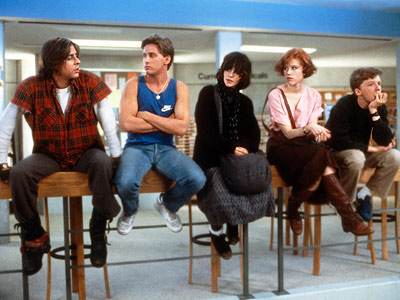
“You see us as you want to see us: in the simplest terms, in the most convenient definitions.”

123046__breakfast_club_l

I will continue posting the story of my decision to not get nipple reconstruction, but to instead get a funky tattoo, a source of much joy for me, in the next few days. I had to interrupt posts on that story because of this other cool post I read.

There was recently a great post at Regrounding about the word victim and its use in Cancerland and a few other communities. I’ve always had much trouble with some language in Cancerland—the words warrior, survivor, hope, awareness, fight, acceptance, healing—all have made me at least uncomfortable, sometimes downright angry. I had not given much thought to the word victim, although I rarely if ever used it to refer to myself, until I read Lori’s post and the comments that went with it. The tweeters in the post’s anecdote, and many of those who commented, outright rejected the word victim, although the meaning of the word fits. Part of me wants to say, yeah, I am a victim, because cancer happened to me through no fault of my own, just like a hurricane or some other natural disaster. As the post pointed out, we have no problem saying, “I am a victim of the most recent hurricane.” But you know, we could place blame on those folks too, couldn’t we? Who told those “victims” to live near the ocean, or near the fault line, or in a tornado-magnet trailer park? Who told you to get fat and not have children so you would get cancer? See my point?

So I am kind of afraid to identify as a victim of cancer. While I do not view myself as weak, I will be perceived that way; judging from that post. One person cannot change the meaning of a word or symbol in society just by proclaiming the word/symbol to have another meaning. Let me explain in an anecdotal example.

Once upon a time, before I got cancer, I got involved in an on air radio discussion. Topic of the day: some folks flying the Confederate flag at a local 4th of July parade (and we are just barely in The South, we never seceded, but yes this area was slaveholding, and our butts were immediately whipped at the start of the war). This rock station’s DJs were a bit conservative, touting individual freedom in order to support the people who displayed the flag. The common agreement was the flag represents state’s rights, and no one should be criticized for displaying it. I called in to discuss this issue, pointing out that 1) everyone has the right to free expression and 2) even the swastika’s origin is Hindu, and once had positive meaning, like being good or your higher self, but it doesn’t mean that now! The DJs misconstrued my comments as supportive. Actually I do support freedom of expression; everyone has the right to make an ass of themselves! (I do it every day.)

Image

But my larger point is this. If I wore clothes with swastikas all over it —even with the little extra dots around it like the Hindu version—I would be perceived as a Nazi, a racist. I could say until I was blue in the face, “no, it’s Hindu for good, being my higher self,” and I probably would just get a lot of funny looks. Bottom line, in today’s society, the swastika means racism and Nazism, Hitler bastardized it, and it will take hundreds of years to change that. The stars and bars mean Confederacy, the losing side of the Civil War, and racism. Even the phrase “state’s rights” was used to really mean the right to own slaves. If you display the rebel flag, especially with the words heritage or pride, you may think you are just showing off your redneck status—or a really misguided devotion to “The Dukes of Hazzard” television show—but you are pretty much going to be perceived as a racist. Yammer on all you want that you are not a racist, that you are just showing pride and heritage, not many will listen or believe you. Sorry folks, that is just how it is, deal with it. (Here is a great opportunity to prove me wrong readers…please!)

These symbols, and words that become symbolic, are societal shorthand to judge each other, to put others into little stereotypical boxes in our minds. See a guy or girl with long hair, sandals, and tie dye t-shirt? Hippie, follower of the Grateful Dead, probably too stoned to be a productive member of society. See a dude with a pocket protector, glasses? Geek, nerd, can probably fix my computer. Hear a breast cancer patient identify as victim? She is weak and helpless. See a bald woman decked out in pink with the ribbon all over? She is a warrior, and she is gonna beat this thing, personally. All of this is just absurd, and not always true.

I do not know how to change how society perceives these symbols. I do know that just me alone, standing here in my corner of the internet saying “I am a victim of cancer, and that is not negative and I am not helpless and weak,” will not change the symbolic language. I could go on all day, picking apart why I dislike all those other words (warrior, hope, survivor), not sure it would get me anywhere. I guess the key is that all of us, not just here in Cancerland should stop judging others.

But the sad question is, can we? Last night for the millionth time, I watched The Breakfast Club (the remote was all the way across the room and I was too lazy to get it), a great film making me nostalgic for my pre-teen and teen years. Ultimately, I am glad for this laziness inspired turn of events. I forgot how brutal the kids are to each other in the beginning. Their judgments and assumptions of each other based on how each kid self-identified by style of dress & choice of friends, was cruel and astounding.  Worst part? Nothing has changed, we are all still living on high school terms! The film is nearly 30 years old, and this quote from it still rings true:

“You see us as you want to see us: in the simplest terms, in the most convenient definitions.”

My challenge to society, especially breast cancer society is this: can we change, stop making assumptions about others based on how we self-identify, etc? For example, online, my blog, can tend to be negative. I can be a positive person in real (not cancer related) life, I do tend to be Pollyanna, always looking on the bright side, I just tend to use my blog & cancer support group as a place to vent. There is a reason for that, but that is a whole other post. Wanna know another secret about me? I may call myself a cancer victim, but I do not have the victim mentality, it has nothing to do with who or how I was before cancer. I came from a poor, uneducated family background. I was the first grandchild on my mother’s side to go to college, and I paid for it MYSELF and I am very proud of that. It would have been easy for me to live out the expected stereotype for my background: redneck, pregnant before 20, etc. and blaming my parents or family for how my life turned out (which is what we think those with a victim mentality do, don’t we?). But I changed my situation because I could. Hell, the fact I look at that as a bad situation shows I am a stereotypin’ jackass my own self!

I cannot change that cancer happened to me.

Now what?
I am a Cancer Victim

Wow, great post, great discussion. I love anything that causes thought provoking discussion.

I am fascinated by the knee-jerk rejection of the word victim. Based on the definition in the beginning of this post, being a victim is nothing to be ashamed of, really. It is not like I actively “asked for it”; I did not sit around, cigarette dangling out of my mouth, beer in one hand, fatty chicken leg in the other going “come and get me cancer!” I did not cause my cancer. And I think there is something to be explored when you say “I wonder if our visceral anger when hearing ‘cancer victim’ isn’t about our not having completely, deeply shaken the notion of blaming the cancer victim.” The message that one can prevent cancer by eating right, exercising, abstaining from smoke an alcohol is ubiquitous and the way I interpret it, I am being blamed for getting cancer. I see many comments about empowering oneself and choosing to do all these right things, and I wonder if that is about helping the patient feel back in control. I pose this question: if we desire to empower ourselves and exert control by doing all these right things, and reject the notion of victimhood, then if cancer returns, are we willing to accept blame?

The word victim seems to be another troubling—for me—piece of the confusing language of cancer. I do not generally call myself a victim, but after this post I might. If I remember correctly, rejection of the word started when breast cancer activism began borrowing from AIDS activism, as patients began to identify as activists, and then blew up when the Komen/Livestrong warrior language (wish I could remember the places I read this, so I could site it). I have so much trepidation regarding these words: awareness, survivor, victim, warrior, acceptance, battle, fight, hope. I am coming to terms with identifying as survivor but I may never be comfortable with the warrior talk. I did not battle cancer; I made logical, informed decisions to go to a doctor, learn my options, and engage in treatment. It wasn’t as dramatic as gearing up for a firefight in Iraq or something, but I do not consider myself passive either; that would’ve been choosing to not get treated and let cancer kill me. To me hope is the most passive word in the bunch, but that is the one slathered all over breast cancer awareness ads, and usually embraced in the community. I don’t like it. Sounds like we are just supposed to wait like good little patients, and hope someone finds a cure. Bleh, no thanks.

It is odd to me that there is discussion about victim mentality; if anything, the example you presented seems to indicate the opposite. Sounds like specifically in this instance there was almost peer pressure to reject victimhood and so forth. I do not think it is a symptom of victimhood mentality, or a failure to move forward by recognizing that cancer had a major impact on my life. Obviously it did, or I would not be blogging about it, or reading other blogs and commenting on them.

Lori's avatarregrounding

vic·tim  [vik-tim] noun

1. a person who suffers from a destructive or injurious action or agency: a victim of an automobile accident.

2. a person who is deceived or cheated, as by his or her own emotions or ignorance, by the dishonesty of others, or by some impersonal agency: a victim of misplaced confidence; the victim of a swindler; a victim of an optical illusion.

(from dictionary.com)

This one is going to rankle some feathers, and I look forward to a brisk dialogue in the comments section!

View original post 579 more words

Former Grunge Girl Attempts to Redefine the Idea of Beautiful Breasts Part 1

As I’ve said before (see Why I Did Not Do Reconstruction), for a number of reasons, I opted to not go with reconstruction. Things like lack of money and fear of surgery factor heavily, as does an overwhelming sense of “it just does not seem right for me”. It’s not like reconstruction would erase all that has happened to me and my body, the scar would still be there, and the created nipple would be there only to make me appear normal to others (men). It will never again be a source of stimulation that women unharmed by breast cancer still have. Why should I try to make it look like it did before? It isn’t, and no amount of cosmetic surgery will make it so.

In some ways, I think I just rebelled against all those save the ta-tas ads, which I believe to be misleading. I hate the boobies/ta-tas culture associated with breast cancer, because ultimately it cheapens and makes light of breast cancer. Judging by some of the reactions to objections about the campaigns—“but breasts are beautiful and they sell/bring awareness”—it almost seems as if people don’t get it: if one gets breast cancer, detected by the ad-recommend mammogram, there is a strong possibility that the afflicted breasts will wind up wrecked. For all the talk of awareness, I think most people who have not actually had breast cancer just don’t understand this—they are UNaware.

Reconstruction, to my punk rock/grunge girl-from-the-90s sensibilities, just seems fake. The culture of the punk/alternative (they aren’t the same but I can be both) rebels against all that fakeness. As a huge fan of this music I embraced this rebellion against all things fake. In addition, being a strong woman back then did not mean dressing like Beyonce; jeans and flannel were OK (dressing like Beyonce and proclaiming female strength is a whole other post, ugh). Sometimes I miss a few aspects of the political correctness and Riot Grrls that were a part of the early 90s. Just sayin’.

I still have these sensibilities, and they probably inform my current opinions about breast cancer culture and my own experience more than I even know. I recognize it enough, however, to know that it is why I reject the reconstruction notion. All this rambling here really boils down to: it just isn’t right for me.

I wanted to do what a few women are now opting to do, to be real and/or express themselves artfully after surgery. By now everyone interested in breast cancer issues has no doubt seen the video or photos of Jill Brzezinski-Conley, and know of the recent fuss on Facebook involving the photo of Inga Duncan Thornell, who tattooed over her mastectomy scars, photos of which are in the book Bodies of Subversion: A Secret History of Women and Tattoo. I did not find much of this stuff while I was in active treatment (despite Bodies of Subversion apparently being written in 2001 or so), and considering reconstruction. In fact it was really difficult to find pictures of women with lumpectomies or mastectomies that mirrored what my body looked like. Everything only showed nearly finished or finished reconstruction. I did not like what I saw. It was not until late in the game I found the SCAR Project and blogging. I found a few bloggers posted pictures of their breast(s) saying they too found it difficult to find pictures. But even with the discoveries of these blogs, there are still NOT lots of pics of what I look like. And still, most pictures I find are women going through the reconstruction process, trying to return to “normal”.

I am still debating, as I write this, whether I will join the ranks of those who post their pictures. Probably will. But I will explain what I’ve done and why, in future posts.

Can I Do Anything?

Great, I have insomnia tonight so I see a post about why sleep deprivation is bad for you. A few clicks into the slideshow and there it is….lack of sleep causes cancer.

Well of course it does. Because there is not a scientist or medical researcher alive that cannot somehow link anything a person does to cancer. And yes, it has to be something the person with cancer did, because we all know those of us with cancer brought it on ourselves. I know I keep harping on the blame the victim issue. I’ll stop when “they” (researchers, scientists, doctors, journalists) stop blaming the patients.

Best part was the note in the blurb saying lack of sleep is linked to recurrence of breast cancer. So I am up at nights sometimes worrying about cancer coming back…and that causes cancer to come back. Or the other half of the time, I’m out like a light, because I still get very tired, very suddenly thanks to all that treatment.

Anyway.

I have to go back to breathing now. Whoops, better not do that, it causes cancer.

Grumpy Cat Does Cancer

Grumpy Cat Does Cancer

Finally, my favorite meme quotes my thoughts exactly!